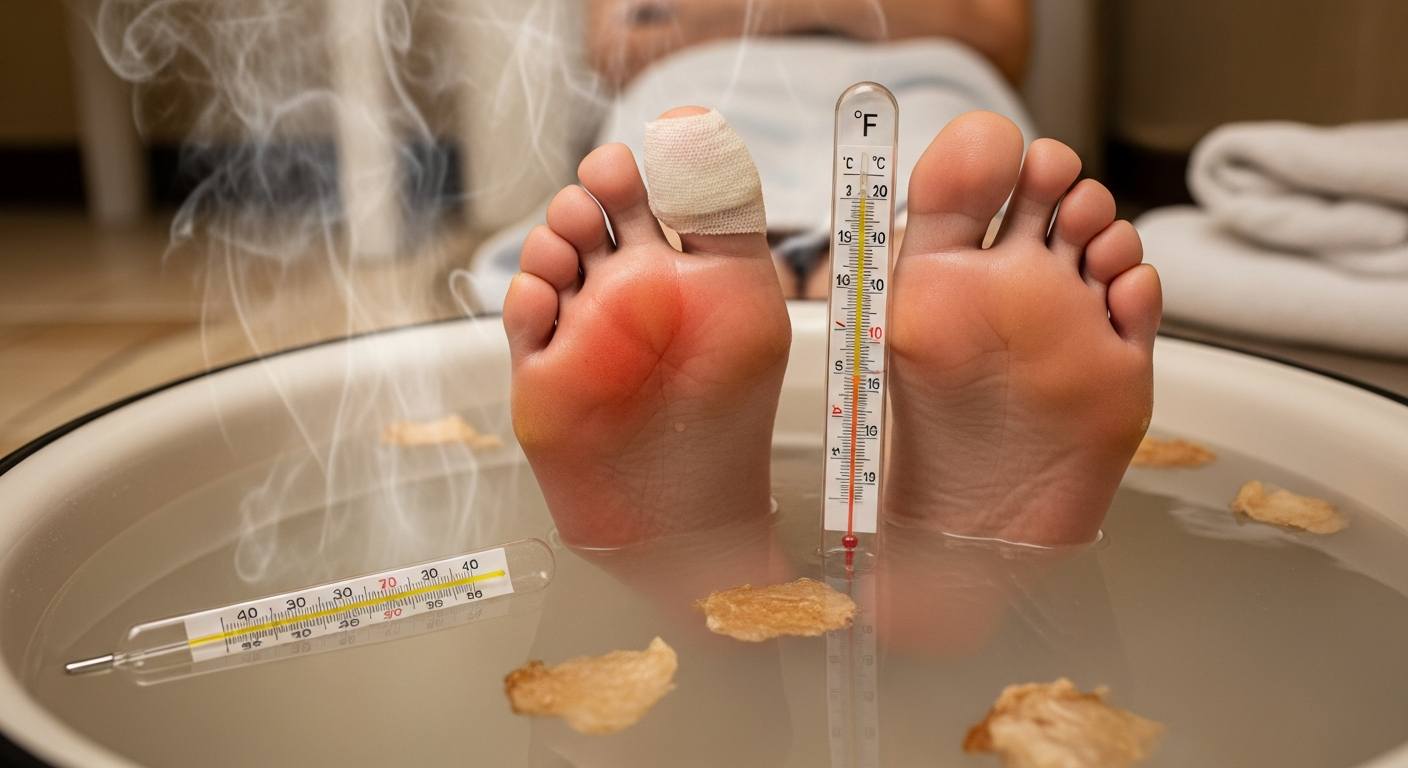
Soaking your feet in hot water can feel soothing, but it isn’t always harmless. In fact, it carries some risks – especially if you have diabetes, nerve damage (neuropathy), or circulation problems. The downsides include burns, skin drying/cracking, increased swelling, and infection risk. For example, you might not realize how hot the water really is if your feet have reduced feeling. What feels “warm” could actually scald your skin. In people with diabetes or neuropathy, missing that warning can lead to serious burns or unnoticed blisters.
In short: while a hot foot bath can relax muscles, soaking feet in hot water can also harm them. Let’s look at the main disadvantages and why certain people should be very careful with hot soaks.
1. Burns and Scalds
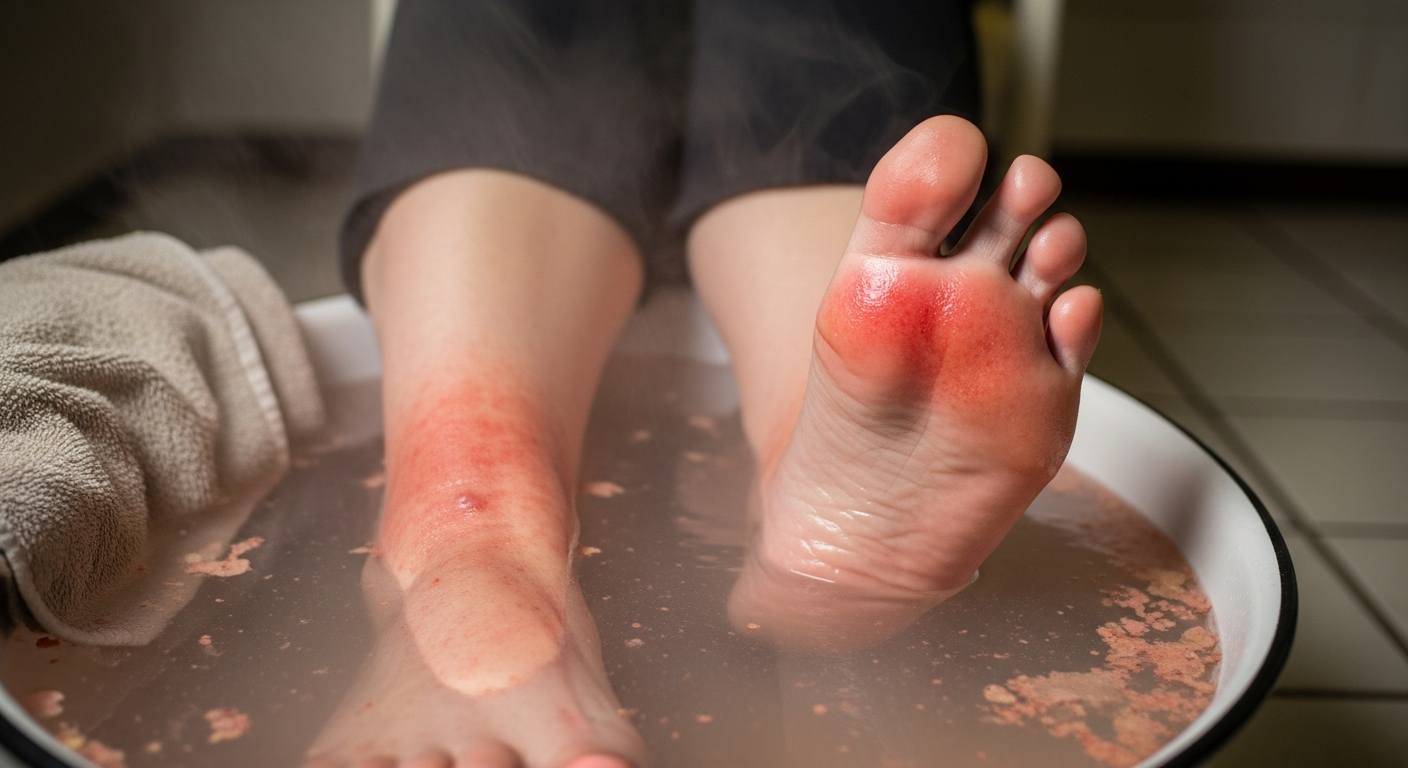
One of the biggest dangers of a hot foot soak is burning your skin. If the water is too hot, even a short soak can cause scalds or blisters. This risk is much higher if you have neuropathy (nerve damage) from diabetes or other conditions. Nerve damage can make your feet unable to sense temperature properly. In other words, your feet might not tell you “ouch, that’s too hot!”. As the American Diabetes Association warns, people with diabetes often lose feeling in their feet – they “may not be able to feel heat” properly and can burn themselves with hot water, bottles, or heating pads. Even a person without nerve damage can accidentally overdo it. Foot doctors emphasize testing the water with your hand or elbow before you step in, and keeping it only warm (around body temperature).
2. Skin Dryness, Cracking, and Irritation
Soaking feet, especially in hot water, strips away the skin’s natural oils. The result can be very dry, tight skin that can crack or peel. Dry, cracked skin is not just uncomfortable – it’s an entry point for germs. People with diabetes are particularly at risk here. Medical experts note that soaking feet can worsen foot problems for diabetics because it dries out the skin and can make existing sores or cracks worse. Ironwood Cancer & Research Centers advises that foot soaks of any type are not safe for people with diabetes because the dryness leads to cracking and infection. Even if you don’t have diabetes, soaking every day or for too long can lead to flaky heels, itchy feet, or eczema flares. Additionally, adding harsh substances (like undiluted vinegar, shampoo, or mouthwash) to a soak may irritate sensitive skin.
3. Increased Swelling and Circulatory Effects
Hot water makes blood vessels open up (dilate). Normally this can help warm up cold feet. But after an injury or if your feet are already swollen, hot water can make the swelling worse. For example, a sprained ankle or strained muscle will often do better with cold or contrast therapy (alternating hot and cold), not a straight hot soak. The extra blood flow caused by heat can increase inflammation in an injured foot. Even without injury, people with poor circulation can feel dizzy or uncomfortable after a long hot soak, because the blood moves around more actively. In rare cases, overly hot soaks have been linked to lightheadedness or chest tightness when a lot of blood rushes to the legs.
4. Fungal and Bacterial Infection Risk
Warm, moist environments are a haven for germs. So soaking feet can promote fungal growth. Cleveland Clinic warns that “fungus thrives in a warm, moist and dark environment”. If you soak and then don’t dry your feet carefully (especially between the toes), you can end up with athlete’s foot or other fungus. Bacteria can also sneak in through softened skin. This is especially dangerous for diabetics or anyone with poor blood flow – infections heal slowly in those cases. A diabetic foot infection, once started, is hard to control and can lead to ulcers or more severe problems. In short, any tiny crack or sore can get worse in a soak. Foot specialists actually recommend not soaking feet to heal wounds or ulcers – it can spread bacteria around and delay healing.
5. Who Should Be Extra Careful?
Some groups should think twice before boiling their toes. People with diabetes, neuropathy (nerve damage), or peripheral artery disease (poor circulation) are at highest risk from hot soaks. The American Diabetes Association explicitly lists “don’t soak your feet” among foot care rules, because soaking dries skin and hides injuries. Foot doctors agree: if you have diabetic neuropathy, you shouldn’t soak at all. As one podiatrist notes, “people with poor circulation or decreased sensation in the feet, such as diabetic neuropathy, are better off not soaking at all” – not feeling the temperature can lead to scalding. Similarly, anyone with open sores, cuts, blisters or even athlete’s foot should avoid hot water soaks, since it could spread infection or worsen their condition. In general, if a healthcare provider has warned you about sensitive feet or slow healing, be cautious with any foot bath.
6. Other Disadvantages and Considerations
-
Over-Soaking: Spending too much time in any water (hot or warm) can damage your skin barrier. Experts say limit a soak to about 10–20 minutes. Any longer, and your skin will lose moisture and become wrinkly or prone to breaking.
-
Frequent Soaks: Even a beneficial Epsom salt soak can backfire if done daily. Ironwood Cancer & Research Centers advises to soak at most 1–2 times per week, because soaking too often will dry out the feet. After each soak, apply a moisturizer – this helps replace lost oils.
-
Additive Cautions: Some people add things like essential oils, Epsom salt, or herbs to a foot bath. While Epsom salt itself is generally gentle, essential oils can irritate if you have sensitive skin or open pores. Always ensure anything you add is meant for skin contact.
-
Hidden Costs: Relying on foot soaks for relief might mask a bigger issue. If your feet hurt or swell often, it’s smarter to seek medical advice than to just soak repeatedly. Foot specialists can address underlying problems (like circulation or structural issues) much better than a soak can.
7. Precautions for Hot Foot Soaks
If you’re set on a foot soak, here are some safety tips to avoid the pitfalls:
-
Check Water Temperature: Always start with lukewarm water, not scalding. Test it with your elbow or hand until it feels pleasantly warm. Aim for roughly 95–100°F (35–38°C) – that’s warm like a nice bath, but not hot enough to burn.
-
Limit Soaking Time: Keep soaks brief – about 10–15 minutes. Going beyond 20 minutes can overdry your skin. Think of it as a gentle spa treat, not a marathon.
-
Dry Feet Thoroughly: After soaking, pat your feet completely dry, especially between the toes. Trapped moisture in those areas invites fungus. Once dry, apply a moisturizer (leave a thin layer between toes, as moisture there can also cause fungus).
-
Moisturize: Hot water removes oils, so lock in hydration afterward. A simple unscented lotion or cream works. Doing this can prevent the “chicken skin” feeling and cracked heels.
-
Avoid Hot Soaks with Open Wounds: If you have a cut, blister, or rash on your foot, skip the soak until it’s healed. Soaking can introduce infection into a wound. Instead, clean wounds gently and keep them bandaged as advised by a doctor.
-
Be Extra Careful if Diabetic: People with diabetes should consult a doctor before any foot soak. Many experts actually recommend not soaking diabetic feet at all. If you do soak, use only lukewarm water, keep it very brief, and check your feet carefully afterward for any redness or damage.
-
Seek Alternatives: Sometimes a warm foot soak isn’t needed. If your feet are simply tired, try gentle stretching or elevating your legs. For swelling or injury, consider a cool or contrast soak instead (alternating warm and cool water as advised by a podiatrist).
8. Conclusion
A relaxing foot bath can feel wonderful – but it’s important to weigh the risks. For healthy feet, an occasional warm soak (with sensible precautions) is generally fine. However, soaking feet in hot water has clear disadvantages: it can burn or scald you, dry and damage skin, worsen swelling, and raise infection risk. These issues are especially worrying if you have diabetes, neuropathy, poor circulation or open wounds. In those cases, doctors often advise avoiding hot foot soaks entirely.
If you love foot soaks, play it safe: use comfortably warm (not hot) water, limit the time, dry and moisturize afterward, and skip soaking if your feet have problems. When in doubt, check with a healthcare professional. That way, you can enjoy clean, rested feet without accidentally trading comfort for complications.
Hot foot soaks can cause burns, skin dryness, swelling and infection. People with diabetes or nerve damage are at highest risk. Always keep soaks mild and brief, dry feet fully, and consult a doctor about any foot concerns. Stay informed and your feet will thank you!