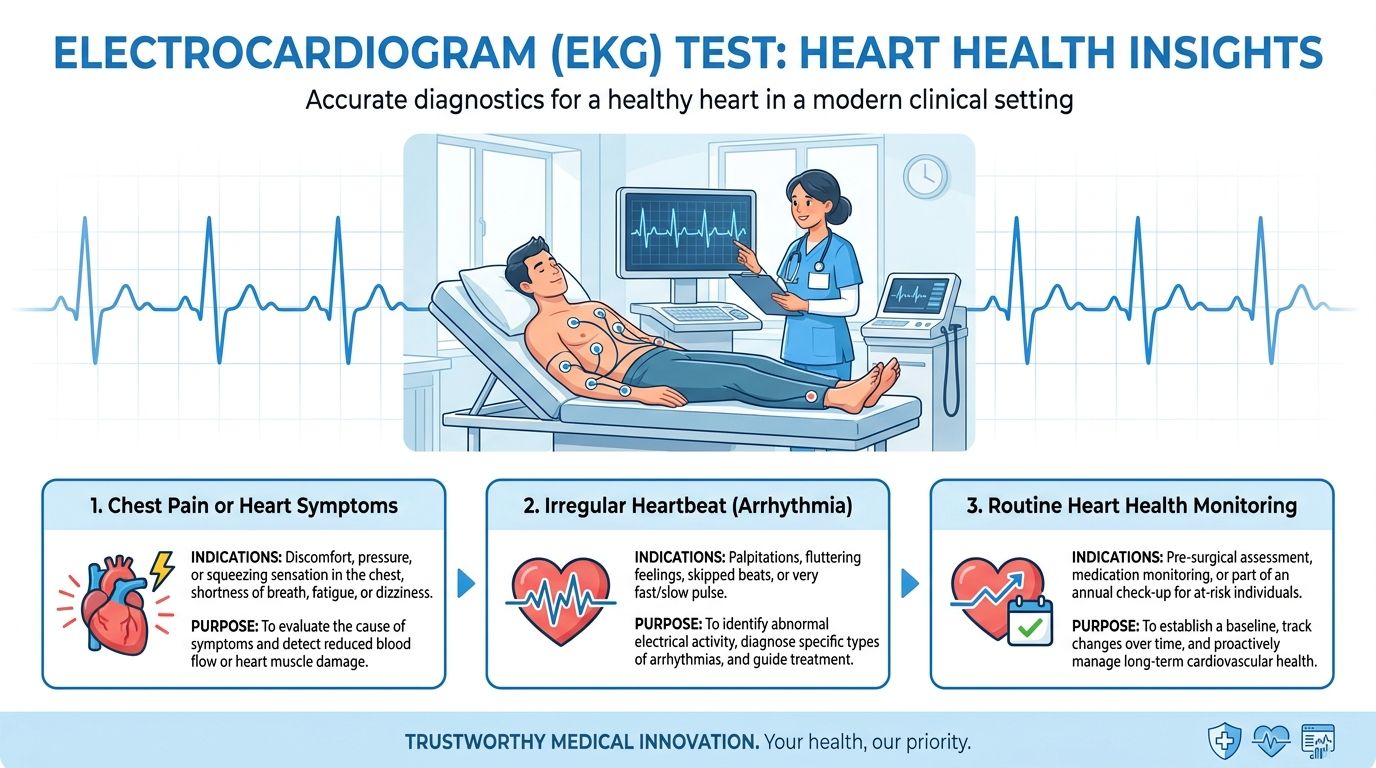
If your doctor tells you to take a heart test, you might ask yourself—what are 3 reasons a person would get an EKG? Simply speaking, doctors order this EKG test to check your symptoms, find heart sickness, or see how your heart treatment is working. It takes very little time, it does not give any pain, and it writes down the electricity signals your heart makes every time it beats. When you know why doctors use it, you will feel less worried the next time they ask you to do it.
1. Checking Symptoms You Cannot Explain
One big reason for doing an EKG is when a patient has body feelings that might come from the heart. Pain in the chest is the most clear symptom, but doctors also check for hard breathing, feeling dizzy, fainting down, or when the heart beats too fast and flutters (we call this heart palpitations). These symptoms do not always mean you have a dangerous sickness, but doctors must check them because they can show a problem in the heart’s electricity or shape.
The EKG machine gives the doctor a quick picture of how your heart electricity is working right at that minute. If your heart misses beats, runs too fast, or beats with a strange pattern while you do the test, the paper will show it. Because of this, it is one of the fastest ways for a doctor to know if there is a problem or not when you visit the clinic or the emergency room.
2. Finding Heart Sicknesses
A doctor can also order an EKG specifically to give a name to a heart condition they suspect. This includes arrhythmias, which means your heart beats out of rhythm because the electricity signals are confused. There are many kinds of arrhythmias; some do nothing to you, and some are very dangerous. The EKG is the main tool to find them. Sicknesses like atrial fibrillation, ventricular tachycardia, and heart block all make special patterns that a heart doctor can see on the EKG paper strip.
Doctors also use EKG to see ischemia, which means the heart muscle is not getting enough blood supply. This low blood flow happens when a person has a heart attack, and the electricity changes show up on the EKG as strange waves. Doctors look at this to see how much of the heart is damaged and where the blood is blocked. In emergency times, this test is done first because it gives answers in just seconds.
3. Watching Over Heart Treatments and Machines
You do not always get an EKG because you feel sick. Many times, it is just to monitor patients who are already taking medicine for their heart. For example, some drugs that fix heart rhythm can sometimes change the heart’s electricity in a bad way. So, the doctor orders regular EKGs to be sure the medicine helps you and does not make new trouble.
Also, people who have a pacemaker or an ICD machine inside their chest must get EKGs regularly to see if the device works right. The EKG tells if the pacemaker sends electricity at the correct time and if the heart answers properly. This regular checking helps doctors fix machine problems or heart changes before they become dangerous.
When EKG is Just a Routine Check
Outside of emergencies, an EKG can be part of a regular health check. This happens mostly for people over 40 years old, or people with high blood pressure, diabetes, or family members with heart sickness. Here, the EKG is used as a “baseline” picture. Having this first record helps doctors compare it later if you feel sick in the future, so they can see changes easily.
Getting an EKG before surgery is also very common. Before a big operation with anesthesia sleep, the medical team must check if the heart is strong enough for the stress of surgery. This is very important for old people or people who had heart trouble before. The test needs only a few minutes and stops bad problems from happening in the operation room.
What Happens When the Test Finishes
After the test is done, a doctor looks at the waves on the paper. Every part of the wave matches a specific action inside the heart beat cycle. The P wave shows electricity in the top rooms of the heart, the QRS part shows the bottom rooms closing, and the T wave shows the resting time. If any wave looks strange, it can mean a different heart issue.
An abnormal EKG does not always mean you have a big disease. It just means you might need more tests, like an ultrasound of the heart (echocardiogram) or a running test (stress test), to see better. Many times, the EKG is just the start of looking for the problem, not the final answer. That is why doctors look at the EKG paper along with your symptoms, your health history, and other tests before they tell you what is wrong.
Conclusion
So, what are 3 reasons a person would get an EKG? To check symptoms from the heart, to find sicknesses like arrhythmias or heart attacks, and to watch if medicines or heart machines are working. Also, people use it for regular checkups and before surgeries. It is a very common heart test that gives answers fast and without pain. If your doctor asks for it, it means they are checking you carefully, not that you are definitely sick.