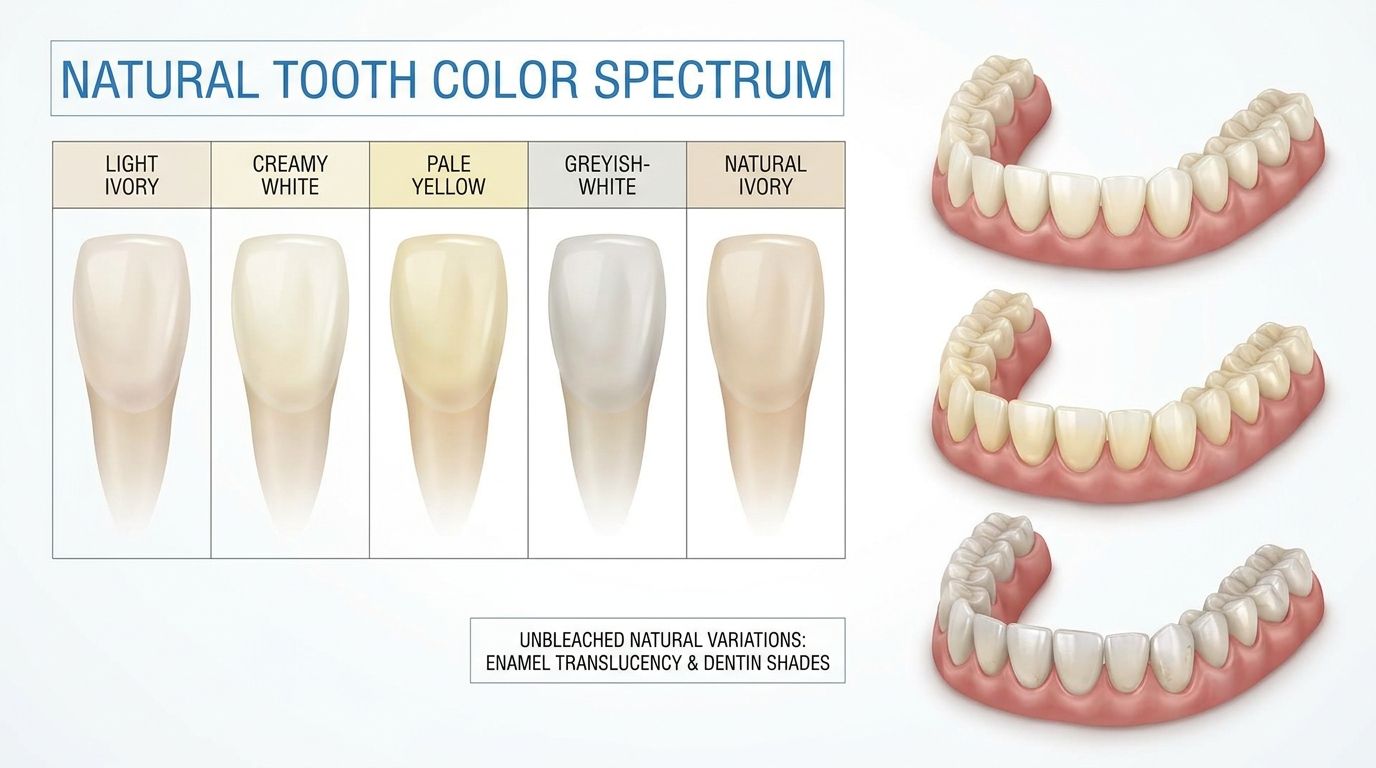
Nobody really told me this when I was growing up, but what are teeth natural color is actually something most people get completely wrong. Those bright white teeth you see in toothpaste ads? That is not how real teeth look. Natural teeth are off-white, a little yellowish, sometimes with grayish tones mixed in, and this is totally normal thing. I spent years thinking something was wrong with my teeth. Nothing was wrong. The Hollywood-white color people chase, that comes from bleaching and veneers, not from nature giving you perfect teeth.
Your Teeth Have Layers, and This is Why Color Looks the Way It Looks
Your tooth is not one solid thing. It has layers, and each one affects what color you see. The outside part is enamel, which is very hard but also see-through like glass, not like paint. Light does not just bounce off it, it actually goes through. Below that enamel is dentin, and dentin is yellow by its nature. So when you look at your teeth, you are not really seeing the enamel, you are seeing yellow dentin coming through the enamel above it. If your enamel is thick, less yellow shows. If it is thin, more warmth comes through. Both of these things are normal and not a sign of bad health.
The inside layer is called pulp, where nerves are sitting. Normally this layer has no effect on color at all. Only when a tooth gets damaged badly or nerve starts to die, that is when one tooth can go dark or gray by itself.
Dentists Have a Chart for Measuring Tooth Color
Dentists are not guessing when they look at your teeth. They use something called the Vita shade guide, which is a tool that matches your tooth shade to one of four groups. Group A is reddish-brown shades, and this is most common one in adults. Group B goes more reddish-yellow and looks a bit more bright. Group C is grayish, which gives a cooler, less warm tone. Group D covers reddish-gray shades that sit on darker end.
Most adults fall somewhere in A or B. That warm, creamy color you are seeing in mirror every morning, that is actually where majority of people land. It is normal placement on this scale.
Genetics Already Decided Much of This Before You Were Born
People want to believe tooth color is something in their control, but honestly big part of it was already decided before birth. If someone is born with thick enamel naturally, their teeth will look more bright, not because they brush better, but because thick enamel is hiding the yellow dentin underneath more effectively. Person with thinner enamel will show more of that yellow warmth no matter how much they are cleaning.
Same way eye color or skin tone works, two people can follow exact same dental routine every day and still end up with different shade of teeth. This does not mean one person is taking bad care. It just means genetics gave them different starting point.
With Age, Things Slowly Change
Children are having the brightest natural teeth usually. Their enamel is thicker and dentin is not fully developed yet, so overall it looks lighter. When adult teeth start coming in next to baby teeth, parents sometimes get worried because the new teeth look more yellow by comparison. But this comparison is misleading thing. Adult teeth are not stained, they are just showing what mature teeth actually look like naturally.
Over many years, enamel slowly wears down. From chewing, from grinding, from acidic foods and drinks over time, the outer layer gets thinner gradually. By the time a person reaches 50s or 60s, more dentin is visible than when they were 20. This is normal aging process, not sign of poor oral hygiene.
Coffee and Smoking Change Things, But in a Different Way
There is difference between natural baseline color of your teeth and staining that sits on top. Coffee, tea, red wine, dark berries, these drinks and foods leave behind pigment that sticks to enamel surface over time. Tobacco brings tar and nicotine which go even deeper. These are called extrinsic stains because they are sitting on outside of tooth. Professional cleaning can usually remove them.
Intrinsic staining is different matter. This type happens inside the tooth structure itself. Sometimes it comes from antibiotics taken in childhood, sometimes from too much fluoride during tooth development, or from old injury to the tooth. These stains do not respond to regular whitening products and need completely different treatment if anything can even be done.
When You Should Actually Pay Attention to Color Changes
Gradual yellowing across all teeth as you get older, that is mostly standard thing and not alarming. What deserves a dentist visit is something sudden or uneven. One tooth going dark while others stay same shade usually means that tooth had trauma or the nerve inside is damaged. White chalky spots are sometimes early sign of enamel erosion or condition called fluorosis. Brown or black patches inside grooves or between teeth are more likely pointing to decay than just staining.
Color alone is not always a diagnosis. But changes you have not noticed before, those are worth checking properly.
Pure White Teeth Is Actually a Marketing Standard, Not a Health Standard
White teeth as beauty standard came mostly from advertising industry, not from dentistry. Bleaching and veneers can bring teeth to very bright shades, yes, but that is cosmetic procedure, not what naturally healthy teeth are supposed to look like. Actually, teeth that are too perfectly uniform white sometimes look strange in person, because real enamel does not reflect light that way. Canine teeth are normally a shade or two darker than front teeth. That small variation across the smile is actually what makes it look like real human teeth.
Knowing what are teeth natural color is honestly useful information that most people do not have. The slightly warm, off-white shade you are seeing in your mirror is not something broken that needs fixing. It is exactly what healthy, real teeth look like, and understanding this can save a lot of unnecessary worry.