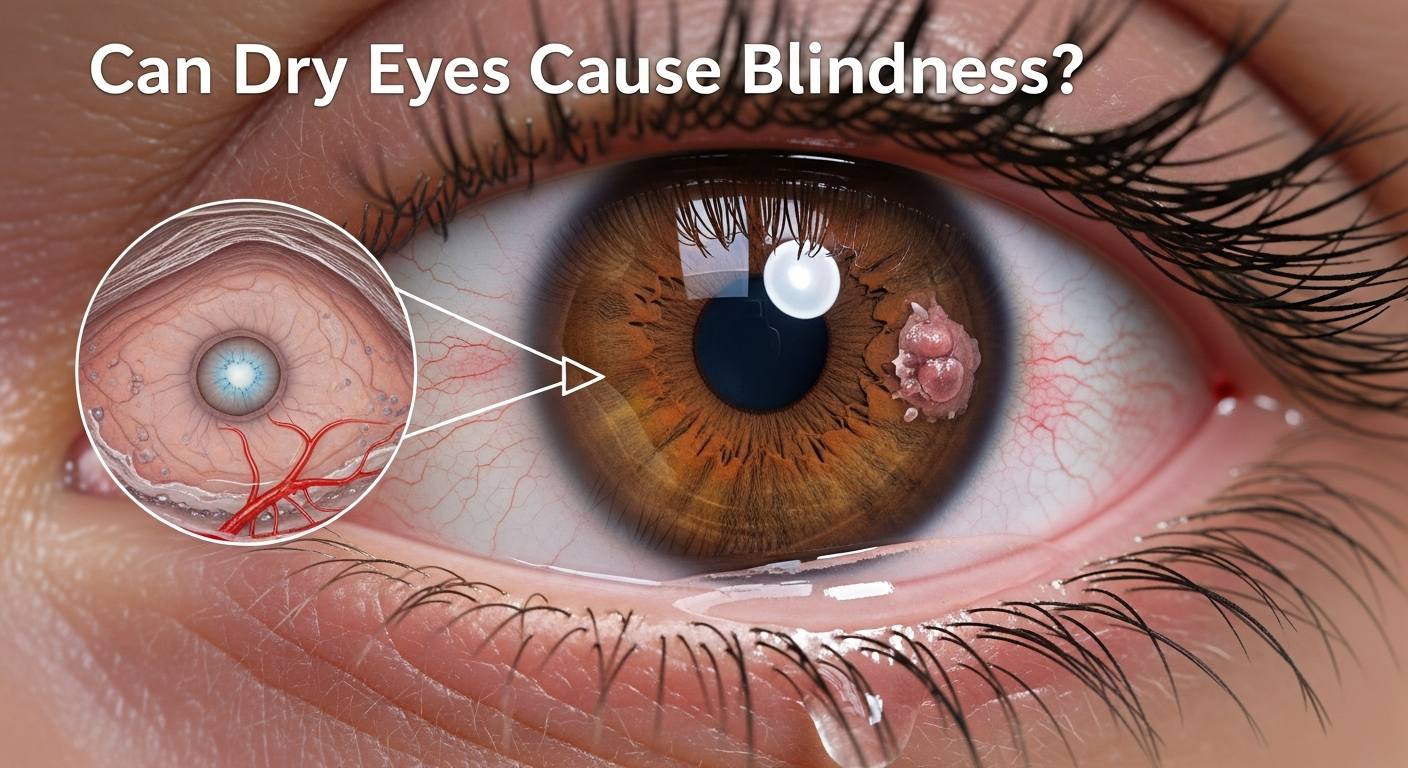
No – having dry eyes usually won’t make you go blind. In act, most dry eye cases are mild and manageable with simple treatments. However, chronic or very severe dry eye that is ignored can damage the eye’s surface. Over time, that damage can lead to serious vision problems and, in extremely rare cases, even partial loss of vision. The key is to treat dry eye early. Let’s explore why dry eyes happen, what complications to watch for, and how you can protect your eyes.
-
Corneal damage: The front part of your eye, called the cornea, needs tears to stay smooth and clear. When your eyes are very dry for a long time, the cornea can develop scratches, ulcers or inflammation. These injuries can leave scars on the cornea that blur your vision. In rare, severe cases, such scarring can cause permanent vision loss. (The U.S. National Eye Institute notes that untreated severe dry eye “can sometimes damage your cornea,” highlighting this risk.)
-
Infections: Tears help wash away germs. Without enough tears, your eyes are more vulnerable to infections like conjunctivitis (pink eye) or keratitis (a cornea infection). Some of these infections can seriously hurt the cornea. For example, keratitis can cause blurred vision or even permanent sight loss if not treated promptly. In other words, chronic dry eye indirectly raises infection risk, and an eye infection that damages the cornea can threaten vision.
-
Blurred vision and discomfort: Even without infection, dry eyes can make your vision go in and out. Many people with dry eye experience temporary blurriness or fluctuating vision, especially after reading or screen time. This happens because dry patches on the eye’s surface distort light. The result can make everyday tasks like driving or reading more difficult. While this blurriness usually comes back to normal when you blink or use drops, persistent dryness can make vision consistently blurry until you treat the problem.
Our tears keep the eye’s front layer (the cornea) healthy. When eyes are too dry, that clear “window” can get scratched or inflamed.
Your eyes naturally make tears that coat the cornea and keep it smooth. When the tear film is disrupted (from age, environment, illness, etc.), the cornea can dry out and become irritated. Think of the cornea like a window: if it stays wet and clean, you see clearly. But if it gets scratched or develops tiny ulcers from dryness, vision becomes cloudy. Over time, repeated damage can leave scars on the cornea that block or distort vision. Doctors warn that severe or chronic dry eye “can damage the cornea – the eye’s outer, clear layer”, which in turn can cause sight to become blurry or even lead to blindness if it gets very bad.
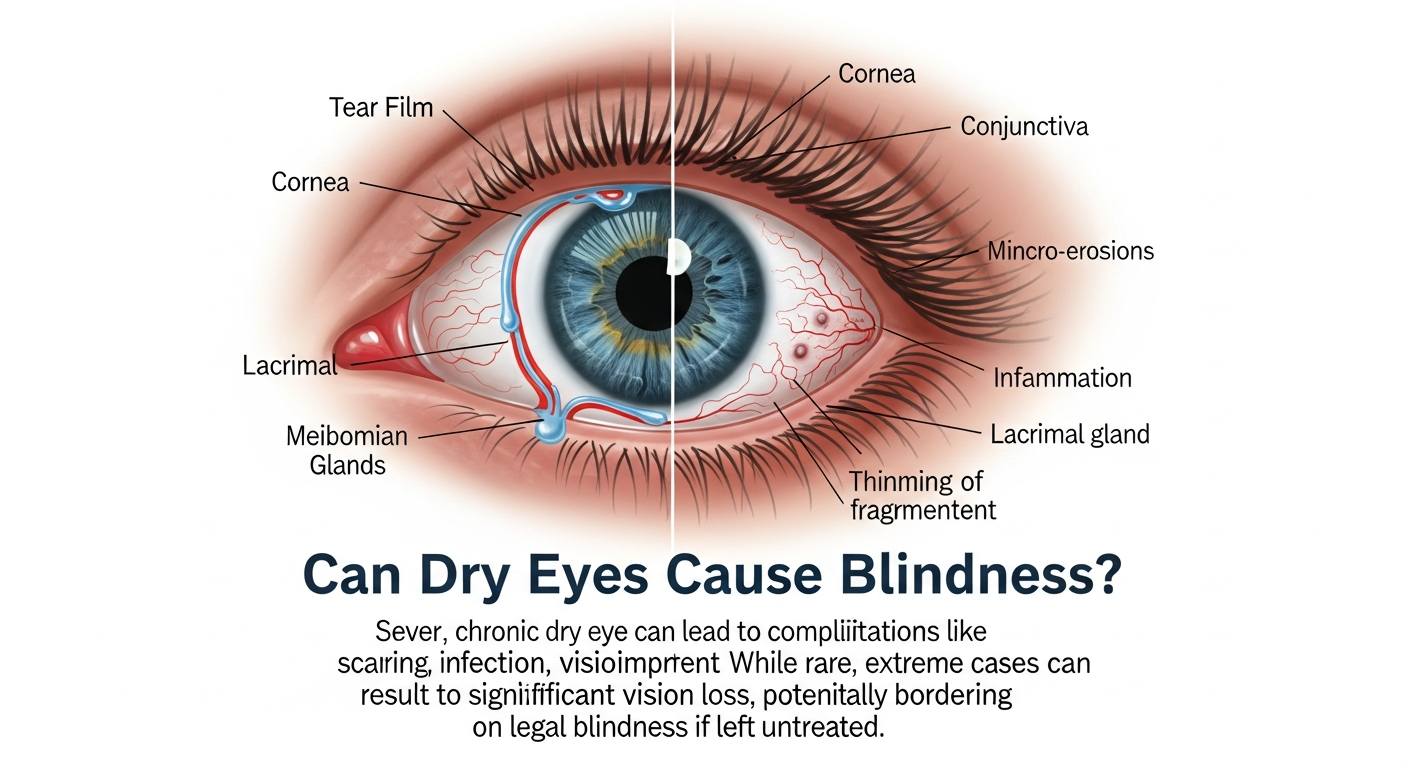
Dry eyes also mean fewer protective tears to wash away bacteria. As Eduardo Besser, OD, explains, tears are the eye’s first line of defense against germs. When you don’t have enough tears, your eyes become a magnet for infection. Minor infections (like pink eye) and major ones (like keratitis) become more likely. Some bacterial keratitis cases literally eat away at the cornea and can cause severe vision loss.
In summary, the damage pathway is this: chronic dry eye → cornea gets scratched/irritated → tiny scars or ulcers form → vision blurs. Infections can speed up this damage. The good news is that this progression is very rare if you take action. Most people with dry eye never get serious complications.
Artificial tears and other treatments can keep your eye moist. Using eye drops regularly helps prevent the kind of long-term damage that may impair vision.
Taking action: The biggest safeguard is to treat dry eyes before they become severe. Many simple remedies help keep the eye surface well-lubricated. Over-the-counter artificial tears (eye drop solutions) can replace missing moisture and relieve irritation. Doctors often recommend lifestyle steps too, like taking breaks during screen use, using a humidifier at home, wearing wraparound sunglasses in windy or dry conditions, and avoiding smoke. In more persistent cases, your eye doctor may suggest prescription treatments: anti-inflammatory drops (e.g. cyclosporine or lifitegrast), punctal plugs (tiny inserts that keep your tears from draining away), or even special contact lenses that hold moisture.
As Medical News Today summarizes, “Dry eye can lead to vision loss and even blindness without treatment.” That sounds scary, but it simply underlines the importance of early care. The risks (scratches, infections, scarring) can all be minimized if you work with an eye doctor. Regular eye exams are key. If you ever notice persistent symptoms – such as ongoing burning, redness, grittiness, or frequent blurriness – get checked. Timely diagnosis means simple fixes.
Conclusion:
For the vast majority of people, dry eyes are very unlikely to cause permanent vision loss. Most dry eye can be managed easily with drops and healthy habits. Blindness from dry eye is extremely rare – it usually only happens if someone has a severe chronic condition and doesn’t get any treatment. By taking dry eye seriously from the start, you can keep your eyes comfortable and your vision safe.