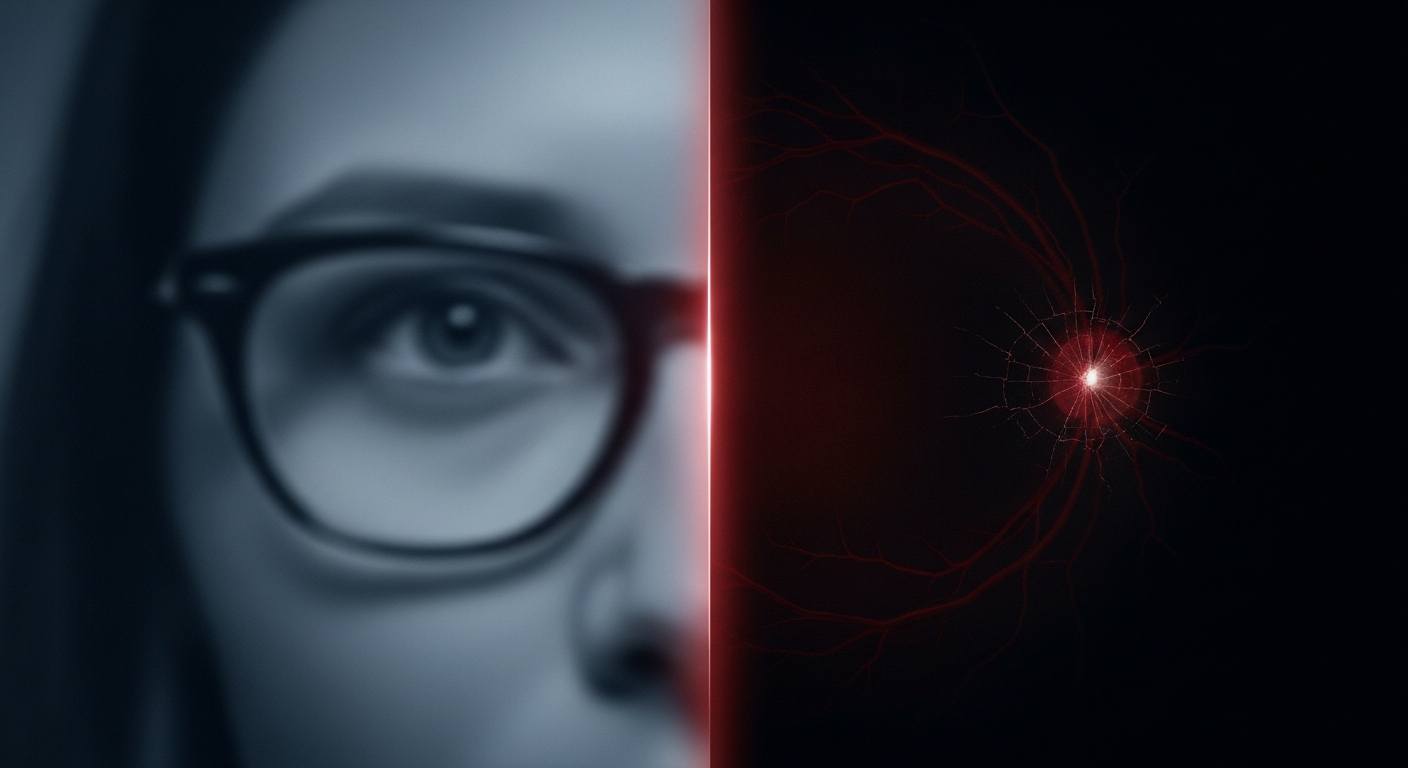
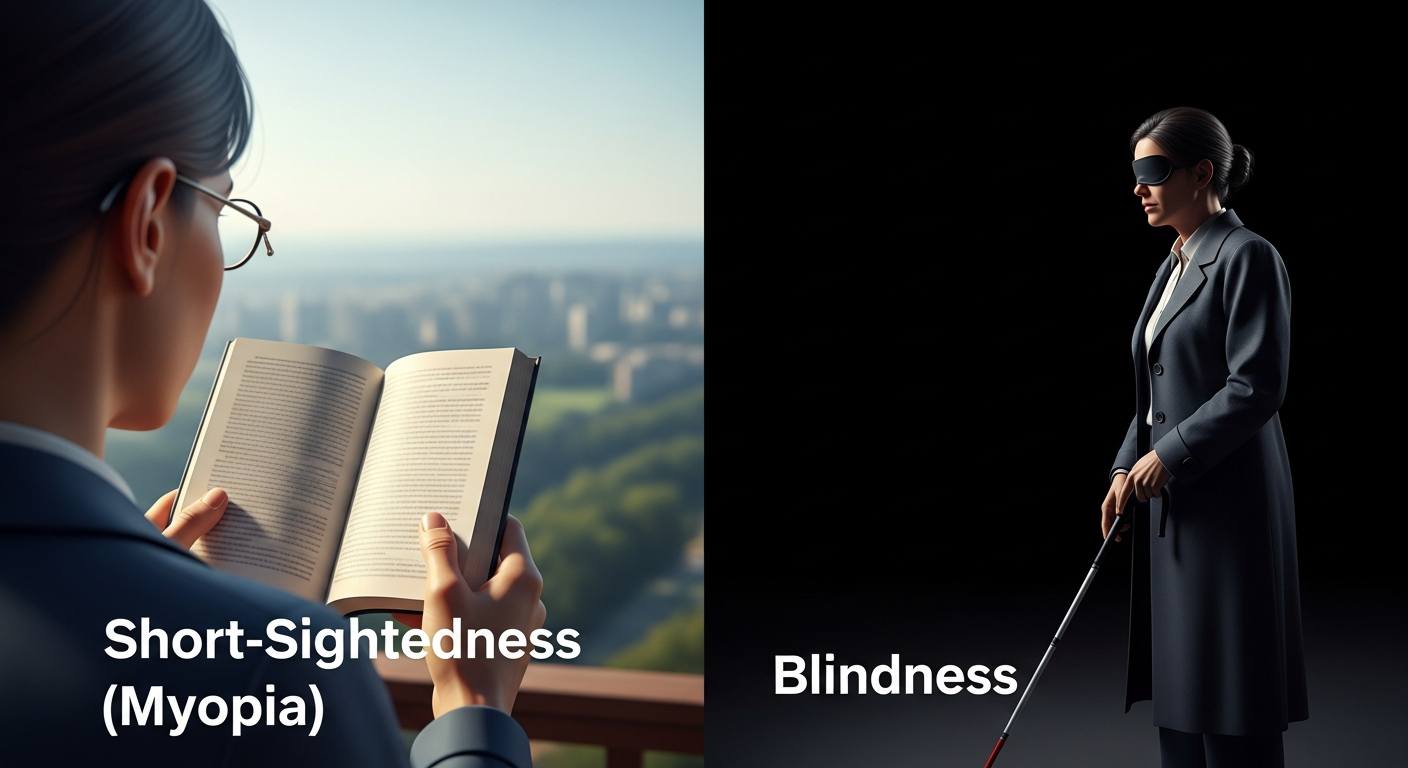
Short-sightedness (myopia) by itself almost never causes complete blindness. Nearsighted people usually just need glasses or contact lenses to see clearly at a distance. However, very high myopia (extreme nearsightedness) stretches the eyeball more than normal. This extra stretching can raise the risk of serious eye problems. In rare cases, untreated high myopia can lead to complications that cause permanent vision loss.
Understanding Short-Sightedness
Myopia means the eye focuses light in front of the retina instead of directly on it. This happens because the eyeball is slightly longer than normal or the cornea (the front lens) is too curved. The result is clear vision up close but blurriness far away. With regular correction (glasses, contacts, or vision surgery), people with myopia usually see very well. Regular myopia alone does not make someone blind. Lenses simply refocus light onto the retina, correcting the blur.
Not all myopia is the same, though. We often label myopia by how severe it is. Low to moderate myopia (for example, needing less than –6 diopters of correction) usually stabilizes by the end of the teenage years and only requires normal vision correction. High myopia (around –6 diopters or more) means the eye is much more elongated than normal. In a very myopic eye, the retina and blood vessels are stretched thin, and the eye’s internal tissues are under more strain. It is in these cases that the risk of vision-threatening problems becomes significant.
Why Severe Myopia Can Be Risky
When the eyeball is stretched in high myopia, the back of the eye changes in ways that can threaten vision. Here are some of the serious eye issues linked to extreme nearsightedness:
-
Retinal Detachment: A stretched retina is thinner and can tear more easily. If a tear lets fluid sneak underneath, the retina can peel away from the eye wall. Retinal detachment causes a “curtain” or shadow in the field of vision and can destroy sight if not fixed quickly. People with high myopia have a much higher chance of retinal detachment than others.
-
Myopic Macular Degeneration: The macula is the central part of the retina responsible for sharp, detailed vision (for reading and seeing faces). In severe myopia, the macula can develop cracks or scars (sometimes with tiny bleeding). This damage gradually blurs central vision. Over time, it can become severe enough to cause very poor vision or legal blindness if not managed.
-
Glaucoma: High myopia increases the risk of glaucoma, a disease where pressure in the eye damages the optic nerve (the nerve connecting the eye to the brain). Myopic eyes may not drain fluid normally, so even moderate pressure can be harmful. Glaucoma usually has no symptoms at first and slowly narrows the field of vision. Without treatment, it can eventually cause tunnel vision and blindness.
-
Earlier Cataracts: A cataract is when the eye’s natural lens becomes cloudy. People with myopia tend to develop cataracts at a younger age. Cataracts blur vision but are usually removed with surgery. However, highly myopic eyes may have a more complicated surgery and slightly higher risks. If surgery is delayed or not possible, the clouding will leave vision severely blurred.
Beyond these, very high myopia is also linked to other rare issues, like optic nerve damage unrelated to pressure and abnormal blood vessel growth under the retina. The important point is: being nearsighted doesn’t directly blind you, but extreme nearsightedness raises the odds of conditions that can.
Warning Signs to Watch For
If you have high myopia, be alert to sudden changes in vision. Warning signs include flashes of light, a new shower of floaters (tiny spots or strings drifting in your vision), or seeing a gray curtain/veil across part of the view. These may signal a retinal tear or detachment, which needs immediate treatment. Also watch for any sudden distortion of straight lines or a quick loss of clarity, which might mean macular damage. Frequent headaches or eye strain are common in people who are very nearsighted and are usually not dangerous by themselves, but if you notice anything unusual, let your doctor know.
Managing Myopia and Protecting Vision
The good news is that severe vision loss from myopia is very rare when the eyes are properly cared for. Here are ways to reduce risk:
-
Regular Eye Exams: Especially if you have high myopia, see an eye doctor regularly (for example, every year or two). They will dilate your pupils to inspect the retina, optic nerve, and blood vessels. Small problems like a retinal tear or early glaucoma can be treated long before they threaten vision.
-
Myopia Control (for kids): If a child’s myopia is increasing quickly, treatments can slow its growth. Options include low-dose atropine drops, special contact lenses (like overnight orthokeratology), or multifocal glasses/contacts. Encouraging children to take frequent breaks from close work and spend time outdoors each day can also slow myopia progression. Slower progression means the eye is less likely to become extremely elongated.
-
Eye Protection and Care: Wear sunglasses with UV protection outdoors to shield your eyes (UV light doesn’t cause myopia but helps overall eye health). Use protective goggles during sports or hazardous activities to avoid eye injuries. Practice good visual habits: take regular breaks from screens or reading, and work in well-lit environments to reduce eye strain.
-
Prompt Treatment of Issues: If an eye doctor finds a retinal tear, they can often seal it with laser or freezing treatment. If signs of glaucoma or macular changes appear, treatments like eye drops, lasers, or injections can slow the damage. The key is early intervention: treating problems while they are small helps keep your vision safe.
In summary, common short-sightedness is widespread and easily corrected with lenses, so it very rarely causes blindness. However, very high myopia changes the eye’s structure enough to increase the risk of serious, vision-threatening conditions. By staying proactive with eye care—attending routine exams, protecting the eyes, and watching for any warning signs—you can greatly reduce the chance that short-sightedness leads to permanent vision loss. Modern eye care provides many tools to protect your vision, even if you have high myopia.