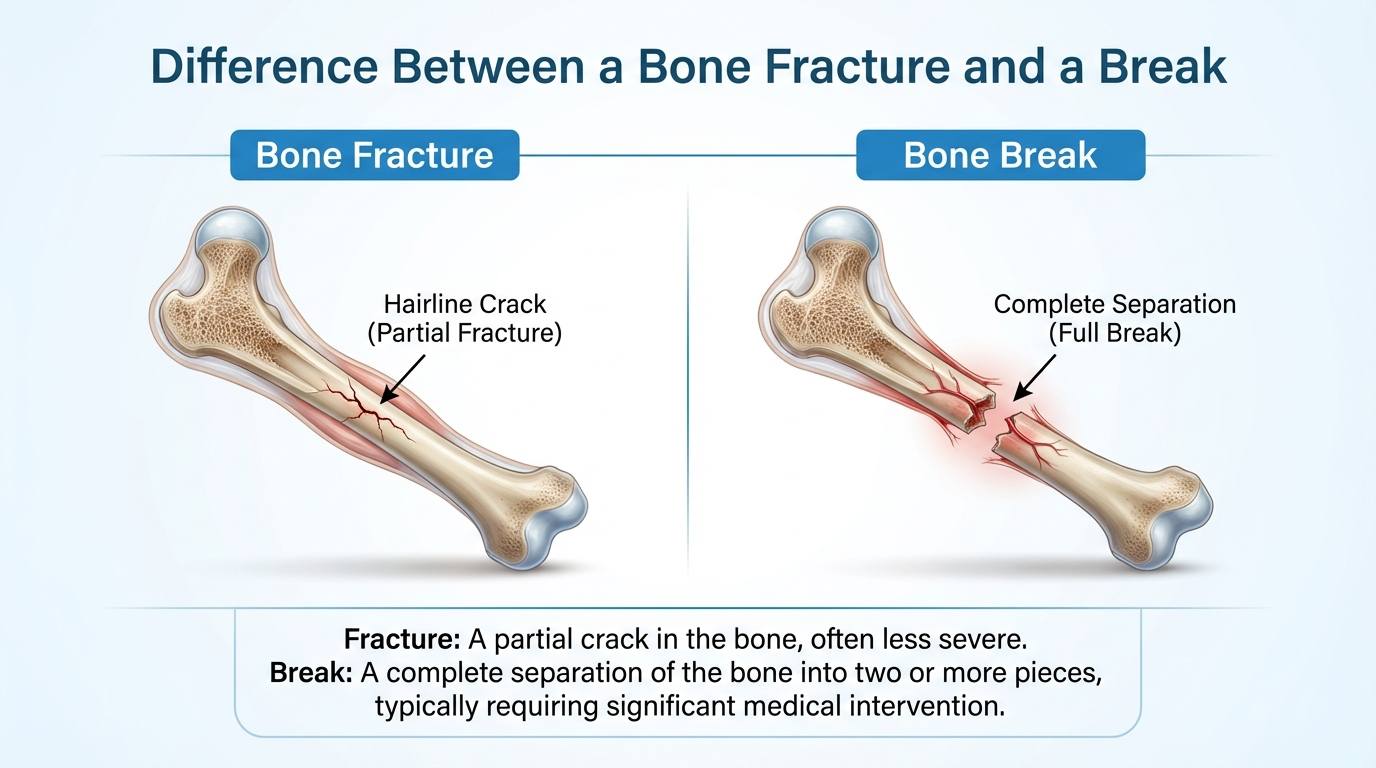
If you’ve ever injured a bone, you might wonder: is there really any difference between a fracture and a break? In fact, medical experts say they mean the same thing. A fractured bone simply means the bone is broken. One source notes, “whether you hear the term fracture or break, it all means the same thing: your bone is damaged”. In other words, fracture is the medical term and break is the common term for the same injury. Neither word is more severe than the other; what really matters is how badly the bone is damaged. For example, the human body has 206 bones (even more in infants), and any one of them can break if enough force is applied. No matter your age or which bone it is, a crack in the bone needs attention. Doctors themselves note that a fracture and break are synonyms for the same injury. You can think of it like regional dialects calling soda “pop” or “cola” – different words for the same thing.
Bones are very strong, but they will snap if enough force hits them. For example, a fall, a twist, or a collision can push a bone past what it can handle, causing it to crack or break. Whether the bone has a tiny crack or has split into pieces, doctors call it a fracture. In everyday speech, people often say broken bone. So if you hear either term, remember it’s the same kind of injury. Children might say, “I think I broke my arm,” but a doctor will just say it’s a fracture. If you suspect a fracture, try to keep the injured limb still and apply ice to reduce swelling. This simple first-aid (Rest, Ice, Compression, Elevation) can help before you get medical care.
Bones can break in different patterns. Doctors give names to these types of fractures. The cartoon above shows a person with a broken leg in a cast – a common way to treat a fracture. Some common types include:
-
Simple (Closed) Fracture: The bone breaks in one spot, and the skin stays intact. It often heals well with a cast or splint.
-
Compound (Open) Fracture: The bone breaks and punctures the skin. This is more serious because of infection risk; it usually needs prompt medical care and possibly surgery.
-
Hairline (Stress) Fracture: A very thin crack in the bone, like a crack in a sidewalk. This often happens from repetitive stress (like long-distance running). It may only hurt a bit at first, but can worsen if ignored.
-
Spiral Fracture: A break that spirals around the bone, caused by a twisting injury. Common in sports injuries where the body turns and the limb stays planted.
-
Comminuted Fracture: The bone shatters into three or more pieces. This usually requires surgery to realign the pieces.
-
Greenstick Fracture (children): In kids, bones can bend and crack on one side without breaking all the way through. It’s still considered a fracture even though the bone isn’t fully snapped.
No matter the type, treatment follows the same basics. First, a doctor will take an X-ray to see the break clearly. Then the bone fragments are aligned (set) and kept perfectly still so they can heal. Most fractures heal with a plaster or fiberglass cast, or a brace/boot. For example, a simple wrist fracture often only needs a cast to hold it in place. More complicated breaks, like compound or comminuted fractures, may require surgery to fix the bone with plates or screws. Doctors often say bones set themselves like glue – the cast is the support, and time does the rest of the healing. Keeping the limb elevated and iced can help control pain and swelling during this time.
Bones actually heal by growing new bone tissue over time. This can take weeks or even months. Kids’ bones heal especially quickly; adults may take longer. While a bone is mending, the injured area will swell, bruise, and be very tender. The pain can be sharp if you try to use the limb. You might see rapid swelling and purple bruises around the break. It’s common to hear a snap or crack when the fracture happens. If you notice a limb looks bent the wrong way, or bone is poking through the skin, that’s an emergency. Even if symptoms seem minor, it’s safer to get it checked. As healing progresses, the body forms a hard callus that bridges the break. Eventually, follow-up X-rays usually show that the new bone has filled in and the bone’s strength returns.
In the photo above, a foot is wrapped in a blue cast. Casting is one way doctors keep a broken bone from moving while it heals. The cast holds the bone pieces steady so they can knit back together. After some weeks, when the bone has healed enough, the cast will be removed. Then you’ll do gentle exercises or physical therapy to help the muscles and joints get back to normal strength and range of motion. Doctors always remind patients: don’t rush it. Give the bone the time it needs to heal properly.
Conclusion:
A bone fracture and a bone break are the same thing. The words are different, but the injury is one and the same. The important part is caring for it: rest, ice, and see a medical provider if you suspect a fracture. Follow the doctor’s instructions to keep the bone aligned and stable. With proper treatment and patience, most broken bones heal fully. So remember: focus on healing the injury, not the terminology.