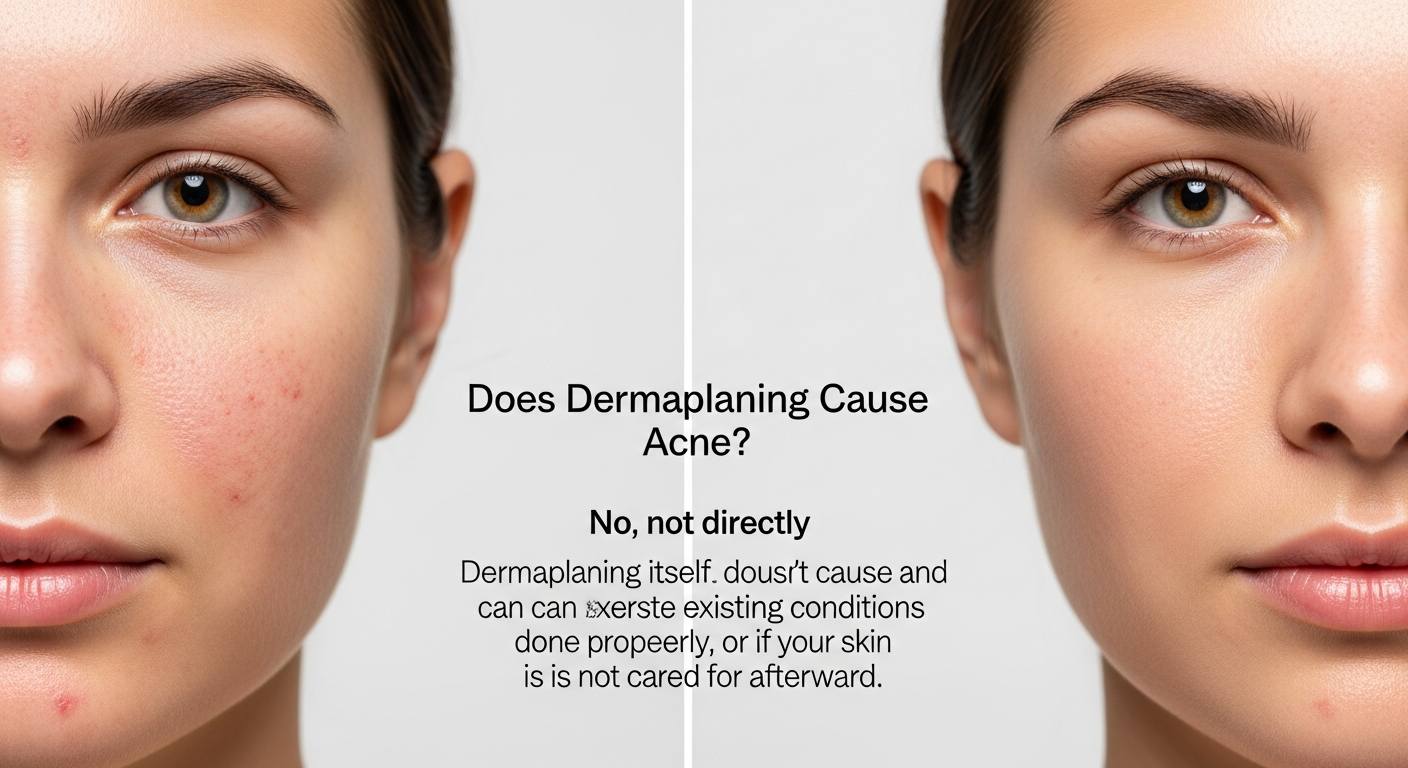
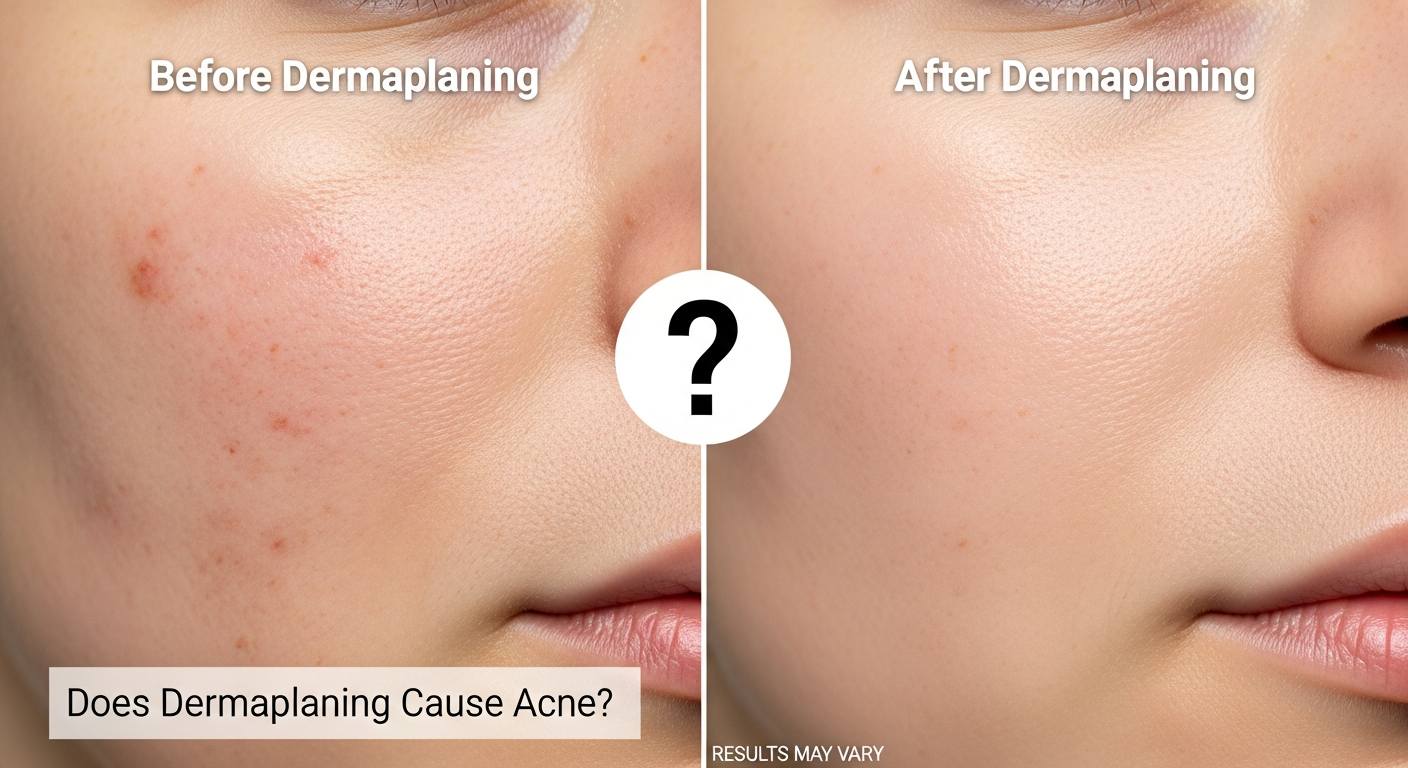
Dermaplaning itself doesn’t cause acne when done properly. In fact, it’s a gentle exfoliation that scrapes away dead skin cells and fine “peach fuzz” hair, usually helping to unclog pores. Many experts note that regular exfoliation keeps skin clear by preventing dead cells from mixing with oil. That said, breakouts can happen if dermaplaning is done incorrectly. For example, shaving over active pimples or using a dirty blade can spread acne-causing bacteria. In short: done right, dermaplaning usually prevents clogs; done carelessly, it may irritate skin and trigger pimples.
What Is Dermaplaning?
Dermaplaning is a non-invasive facial treatment performed with a small, sterile surgical blade. A technician (or you at home) holds the blade at about a 45° angle and lightly scrapes across the skin. This removes the very top layer of dead skin and tiny vellus hairs, instantly leaving skin smoother and brighter. Because it literally shaves off surface “gunk,” makeup goes on more evenly afterward and serums sink in better. (Note: dermaplaning removes peach fuzz only; it does not make hair grow back thicker.)
Why Dermaplaning Alone Isn’t to Blame
By clearing away dead cells, dermaplaning usually helps prevent acne rather than cause it. As Texas Dermatology explains, dermaplaning “doesn’t inherently cause acne — in fact, it removes dead skin that can lead to clogged pores”. Regular exfoliation like this can keep blackheads and whiteheads at bay. For acne-prone skin under control, the smoother surface allows acne treatments and moisturizers to absorb more effectively. In other words, dermaplaning itself isn’t an acne trigger – it’s a method to refresh and brighten skin when done on healthy (non-inflamed) skin.
Why Breakouts Sometimes Occur
Even though dermaplaning won’t automatically give you pimples, certain mistakes can lead to a dermaplaning breakout. Common causes include:
-
Spreading Bacteria: If the dermaplaning blade (or your hands) carries bacteria, it can transfer acne bacteria (C. acnes) across the face. In particular, do not dermaplane over active pimples or cysts. Healthline warns that dermaplaning “shouldn’t be performed on active acne, as it can easily spread the bacteria and cause another flare-up”. Similarly, White Pebble Dermatology notes acne-prone skin may break out if dermaplaning spreads bacteria across your face.
-
Dirty or Dull Tools: Using an old, dull razor or a blade that isn’t sterilized invites trouble. A contaminated blade or poor hygiene can leave bacteria behind and trigger new spots. Always start with a clean, fresh blade – it’s the single most important factor for safety.
-
Over-Exfoliation: Doing dermaplaning too often (or with too much pressure) can harm the skin’s barrier. Texas Dermatology cautions that very frequent or aggressive exfoliation can inflame the skin. If the skin becomes irritated or red, new pimples or bumps can appear just from inflammation.
-
Clogged Pores After: Freshly exfoliated skin is more absorbent. Slathering on heavy, oily creams or makeup right after dermaplaning can clog those freshly-open pores. Texas Dermatology specifically warns against using thick, greasy products for a day or two post-treatment.
-
“Purging” of Clogged Pores: Sometimes small bumps that pop up after treatment aren’t caused by dermaplaning at all, but by old clogs surfacing. Texas Dermatology explains that dermaplaning can bring deep blockages to the surface faster – a process often called “purging”. In other words, your skin is just clearing out existing debris, which may look like a breakout but is really part of healing.
How to Prevent Breakouts
To enjoy dermaplaning without acne surprises, follow these precautions:
-
Avoid Active Acne: Skip dermaplaning if you have red, inflamed pimples or open sores. Healthy skin is key. (If you still have active acne, ask a dermatologist if/when dermaplaning is right for you.)
-
Clean Skin & Tools: Thoroughly cleanse your face with a gentle, non-comedogenic cleanser before dermaplaning. Wash your hands too. Always sterilize the blade or use a brand-new disposable tool. This removes bacteria that might otherwise be rubbed into pores.
-
Gentle Technique: Hold the blade at about 45° and use light, short strokes. Don’t press hard. Rushing or trying to cut too much skin can cause tiny cuts or irritation, which can become inflamed.
-
Listen to Your Skin: Most people only need dermaplaning about once a month. If your skin stays sensitive or you notice redness, give it extra time to recover before the next session.
-
Aftercare Matters: For 24–48 hours after dermaplaning, treat your skin gently. Use a soothing, fragrance-free moisturizer and broad-spectrum sunscreen. Avoid harsh ingredients like strong retinoids, AHAs/BHAs, or vitamin C until the skin calms down. Most importantly, don’t touch your face or put on makeup immediately. Texas Dermatology advises skipping makeup and greasy products for up to 2 days, and Epielle recommends waiting at least 24 hours before applying any cosmetics. A clean pillowcase and careful hands will go a long way.
Following these steps – clean start, gentle action, and careful aftercare – greatly reduces any risk of post-dermaplaning breakouts.
Benefits for Acne-Prone Skin
When acne is under control, dermaplaning can actually be beneficial for oily or blemish-prone skin. Its gentle exfoliation offers several advantages:
-
Clears Dead Skin: It removes the dull top layer of dead cells that can mix with oil and clog pores.
-
Boosts Product Penetration: With the barrier of dead skin gone, acne-fighting creams and serums soak in more effectively. This means treatments like salicylic acid or benzoyl peroxide can do a better job underneath.
-
Fades Scars & Discoloration: By regularly exfoliating, old acne marks and uneven tone can gradually diminish. Texas Dermatology notes dermaplaning helps “reduce the appearance of post-acne marks” over time.
-
Smooths Texture: The result is silkier, brighter skin overall. Many people find makeup glides on smoother and skin feels more even after treatment.
In summary, if you don’t have active breakouts, dermaplaning can be a useful addition to your skincare routine by keeping your skin surface clean and your treatments effective.
Aftercare and Final Tips
After any dermaplaning session, remember that your skin is extra-sensitive. Treat it like a precious healing area for a day or two. Use only gentle, hydrating products (look for ceramides or hyaluronic acid) and always apply SPF before sun exposure. Avoid scrubs, peels, or steaming during the healing window. If you notice any unusual redness or irritation beyond the first day, ease up on active treatments or consult a dermatologist.
Conclusion:
Dermaplaning does not directly cause acne. Breakouts only happen when other factors (dirty blade, active pimples, harsh technique, etc.) come into play. With the right precautions, it’s a safe way to exfoliate – often helping acne-prone skin become clearer over time. As always, if you’re unsure whether dermaplaning is right for your skin, consider consulting a skincare professional. When done properly, many people with oily or acne-prone skin find dermaplaning leaves them with smoother, glowing skin without adding new pimples.