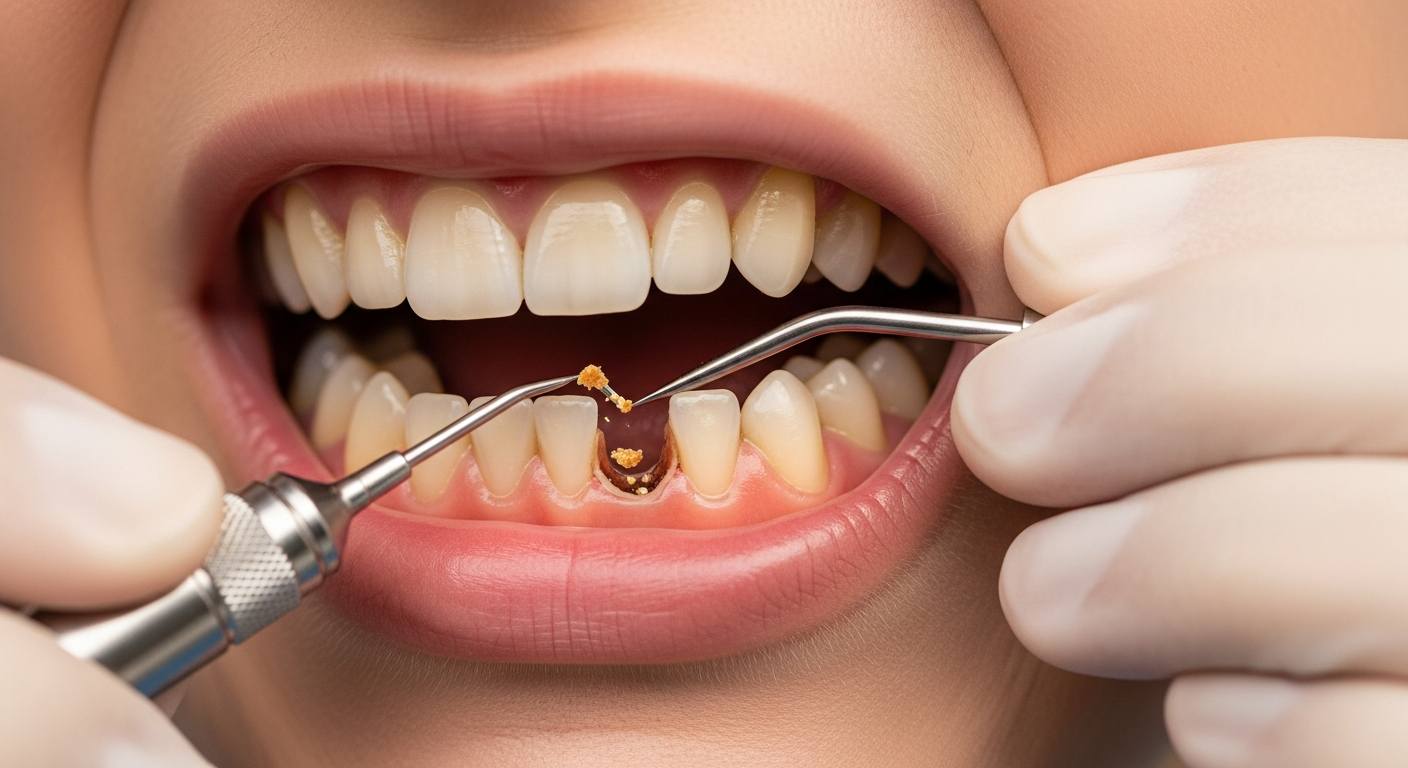
After wisdom tooth extraction, it’s common for tiny bits of food to get caught in the empty socket. The good news is there are simple, safe ways to clear out debris. The easiest first step is to rinse gently with warm saltwater – just ½ teaspoon of salt in a cup of warm water – which helps loosen stuck food without disturbing the healing clot. You can also use the irrigation syringe (if your dentist gave you one) filled with warm water or saline to flush the socket. If those methods don’t fully clear the debris, try very gentle brushing with a clean, soft-bristled toothbrush around the hole. Importantly, avoid poking with hard objects or vigorous swishing and spitting, as these can dislodge the blood clot and slow healing. If food is deeply lodged or you have pain or swelling, contact your dentist rather than forcing it out.
Why Food Gets Stuck and What to Do First
When a wisdom tooth is removed, the bone and gum form a socket that heals from the bottom up. It’s normal for a tiny clot to seal the hole at first, but small particles of food can slip in during meals. At this stage, the top of the socket is open, so bits of rice, salad, meat fibers, or bread may collect there. If you feel something stuck, don’t panic – you can remove it safely. The best immediate action is to leave it alone for a moment and gently rinse. According to dental experts, after the first 24 hours you can swish warm salt water softly around your mouth. Simply allow the saline to flow around the socket and dribble out into the sink (avoid harsh spitting). This rinse helps lift food out of the hole without disturbing healing tissue. In fact, Healthline advises that if the food particle isn’t painful, you can even let it fall out on its own. But if it’s uncomfortable, the saltwater rinse is a safe, first step.
Gentle Saltwater and Herbal Rinses
Saltwater rinse. This is the classic method. Mix about ½ teaspoon of table salt in 8 ounces of warm (not hot) water. Tilt your head so the rinse goes into the side of the mouth with the socket, then very gently swish. Do not swish vigorously – you only need mild bubbling around the socket. After a few seconds, let the water fall out into the sink rather than spitting hard (spitting sharply can dislodge the clot). Repeat up to 3–4 times. The salt helps sanitize and break up any stuck food. If plain salt water is uncomfortable, you can also use a mild warm herbal tea (chamomile or green tea) as a rinse, since these are soothing and anti-inflammatory.
How to rinse properly:
-
Mix ½ to 1 teaspoon of salt into a glass of warm water (avoid hot or cold).
-
Gently swish the solution around the extraction side for about 30 seconds.
-
Let the water fall out of your mouth – do not spit forcefully.
-
Repeat a few times, especially after meals.
Saltwater rinses can be done up to four times a day after the first full day of healing. You might feel food loosening as you rinse; this means the salt water is working to dislodge the debris.
Using an Oral Syringe or Water Flosser
Your dentist may provide a small curved-tip irrigation syringe after surgery. About 3–7 days post-extraction, you can use this to flush out stuck food. Fill the syringe with warm (not hot) water or saltwater, and carefully insert the curved tip into the socket. Aim the stream toward the food pocket, and gently squeeze for a few seconds. The pressure of the water can lift the lodged food out. Be sure not to force it into the tissues; the goal is a gentle flush. If you don’t have a syringe, a clean small spray bottle can work similarly (once you’re able to open your mouth fully).
Many post-op instructions agree: you can start using the irrigation syringe around day 3 after surgery if there’s debris. Use it once or twice a day (for example, after meals) to keep the area clear. Always make sure the water is only lukewarm and use the syringe with care to avoid touching the delicate gums. A low-pressure water flosser (oral irrigator) can also be used on the gentlest setting to dislodge particles, but check with your dentist first (they may want you to wait a week or two before using a water flosser).
Gentle Brushing and Oral Hygiene
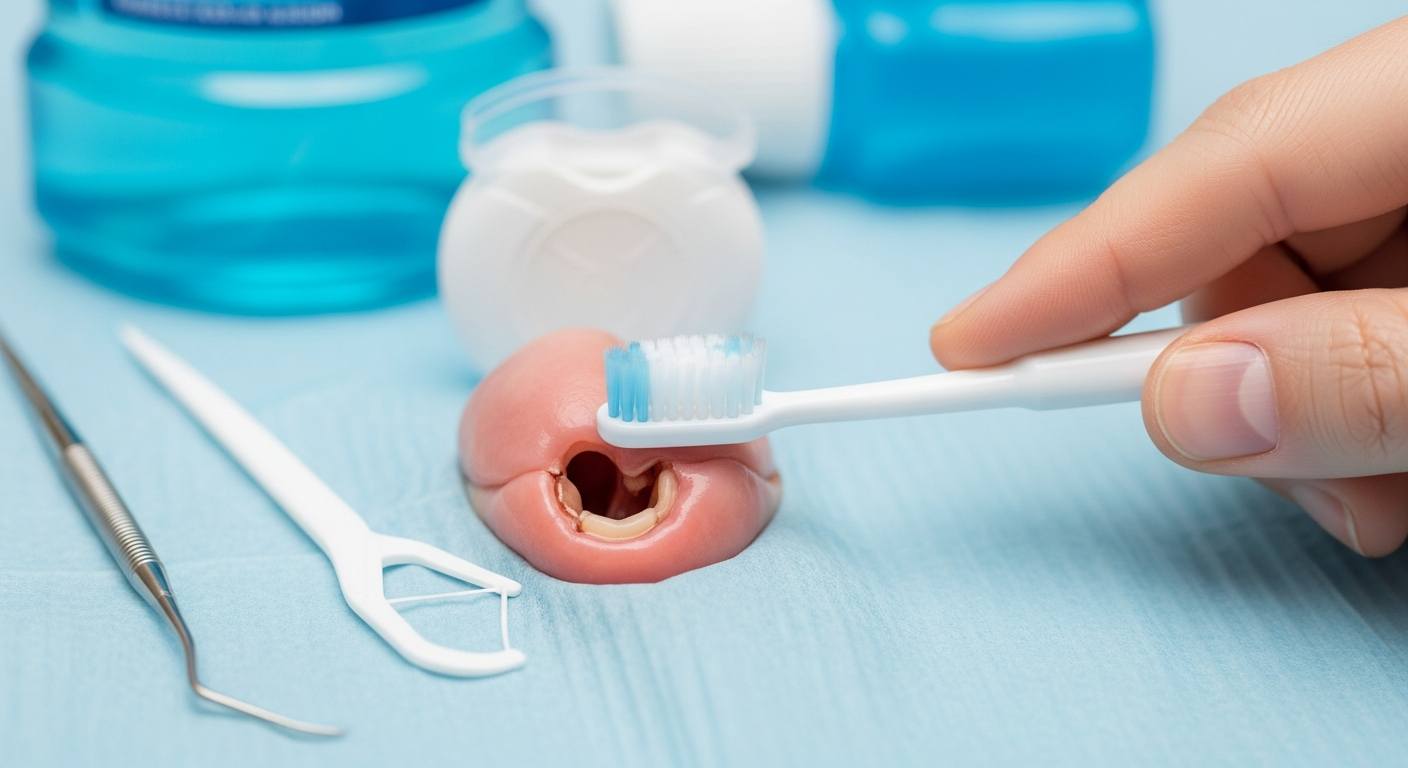
Keeping good oral hygiene is key. Around a week after surgery, you can carefully brush the tooth surfaces next to the extraction site with a very soft toothbrush. Use small, gentle strokes so you don’t jab the socket. The bristles can help dislodge particles clinging near the gums. You can also use a piece of sterile gauze on a Q-tip (cotton swab) to very gently wipe the area if brushing is uncomfortable. If floss can reach easily without pushing food further in, a gentle swipe of floss might help pull bits away from the socket mouth.
A mild, alcohol-free mouthwash can rinse bacteria away, but only use it after the first couple of days, and never before 24 hours post-surgery. Instead, focus on the saltwater or tea rinses. By the end of the first week, gentle daily brushing and rinsing should keep the site clean and minimize trapped food.
Other Helpful Home Remedies
In addition to rinsing and brushing, here are a few more tips:
-
Drink lots of water: Staying hydrated helps healing and naturally rinses your mouth during the day.
-
Use a water flosser: On a gentle setting, this can flush out debris. (Check with your dentist on the timing.)
-
Massage nearby gums: Gently moving your tongue or clean finger (with very clean hands) around the area can sometimes free a stubborn bit. However, be extremely gentle and use a gloved finger or clean Q-tip to avoid bacteria.
-
Avoid irritants: Don’t use harsh oral rinses like hydrogen peroxide or strong antiseptics, as these can delay healing or irritate tissues.
If a piece of food is very small and not causing pain, you could also choose to leave it alone. Wisdom tooth holes heal from the bottom up, so even if a crumb stays a few days, it may simply fall out as the socket closes.
What Not to Do
It’s crucial not to push or scrape the hole with sharp tools. Never use a toothpick, fingernail, or unsterilized instrument to dig out food – this risks infection and can break the healing clot. Also avoid any strong suction or forceful actions near the site. That means no:
-
Spitting or forceful rinsing: Vigorous spitting or swishing can disturb the clot and cause a painful dry socket.
-
Using straws: Sucking on a straw creates negative pressure and can pull the clot out.
-
Smoking: Smoke and sucking can also dislodge clots and introduce bacteria.
-
Sharp foods: Crunchy seeds, popcorn hulls, and hard chips should be avoided as they easily get stuck.
If a gentle rinse or brush won’t budge the food, don’t try more drastic measures on your own. Forcing it may do more harm than good.
When to Seek Dental Care
Most of the time, trapped food is just a minor annoyance, not a crisis. However, watch for warning signs. According to dental experts, call your dentist if you have any of these symptoms after a few days:
-
Severe or worsening pain (not relieved by normal painkillers).
-
Increasing swelling around the extraction site.
-
Pus or bad taste that won’t go away with rinsing.
-
Fever or general signs of infection.
Persistent pain accompanied by an unpleasant taste or visible bone could indicate dry socket or infection. In that case, the dentist may need to clean the socket in the office or prescribe medication. If you simply can’t remove the lodged food and it’s painful, it’s best to let a professional irrigate the site.
Tips to Prevent Food Getting Stuck
Once you’ve managed to clean the hole, think about how to minimize future snags:
-
Eat soft foods: Stick to yogurt, mashed potatoes, soups, eggs, smoothies, and other soft items for the first week.
-
Chew away from the site: If possible, bite and chew on the opposite side of your mouth.
-
Rinse after every meal: Even a quick gentle saltwater rinse after eating will wash out loose particles.
-
Avoid tricky foods: Skip nuts, seeds, popcorn, corn kernels, and sticky candy until fully healed.
By being careful with your diet and oral care, you reduce the chance of trapping food under healing gums.
Conclusion
Getting a little food stuck in a wisdom tooth socket is common and usually easy to fix. Calmly use gentle methods — warm saltwater rinses, an oral syringe, or soft brushing — to flush it out. Avoid aggressive actions that might disturb healing tissue. Always follow your dentist’s post-op instructions, and contact them if anything feels seriously wrong. With these precautions and steps, you’ll keep the extraction site clean and heal comfortably.