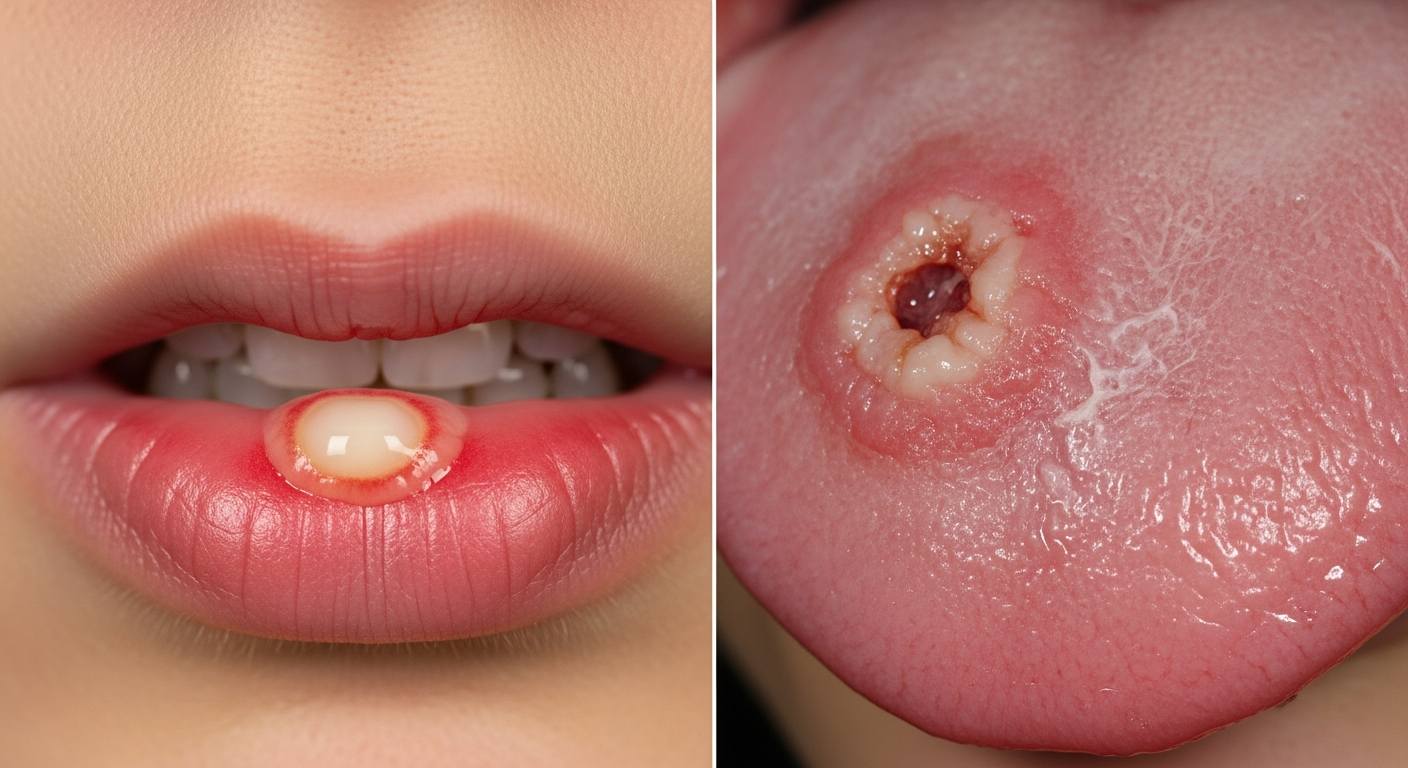
A mouth ulcer (canker sore) is usually a small, round or oval sore inside the mouth that is painful but heals on its own within a week or two. In contrast, oral cancer often starts as a patch, lump, or sore that does not heal on its own and can grow or change over time. In other words, if a mouth sore lasts longer than two or three weeks or changes in appearance, it’s a warning sign that it should be checked by a doctor or dentist. This difference in healing time is often what doctors look at first when examining a mouth sore.
What Are Mouth Ulcers?
Mouth ulcers, often called canker sores, are very common and usually harmless. They appear as small, shallow sores with a white or yellow center and a red border. You might get one from accidentally biting your cheek, brushing too hard, eating spicy foods, or even from stress or a vitamin deficiency. Most people will get a canker sore at some point in their life. These sores can be painful, especially when you eat or drink, but they typically heal by themselves in one to two weeks.
What Is Oral Cancer?
Oral cancer (sometimes called mouth cancer) happens when cells in the mouth grow uncontrollably. It can occur on the tongue, inside the cheeks, on the gums or lips, or on the floor or roof of the mouth. Early on, it might look like a flat red or white patch, a lump, or a persistent sore. Unlike a simple ulcer, an oral cancer lesion often does not hurt at first. Over time, it can grow larger or become more painful. Common risk factors include smoking or chewing tobacco, heavy alcohol use, and certain viruses (like HPV). Having one or more of these risk factors doesn’t mean you will definitely get oral cancer, but it does mean any unusual mouth sore should be taken seriously.
Key Differences Between a Canker Sore and Oral Cancer
Here are some of the main ways to tell the difference:
-
Appearance: A typical canker sore is round or oval, with a soft white or yellow center and a bright red border, looking like a shallow crater. An oral cancer spot may appear as a red or white patch, an irregular lump, or an ulcer with raised or hard edges. Cancerous patches can also be mixed red and white or feel firm.
-
Pain: Canker sores are usually very painful when they first appear, especially when irritated. The pain generally decreases as they heal. Oral cancer lesions, however, often aren’t painful in the early stages – you might not notice them at all until they grow or become sore later.
-
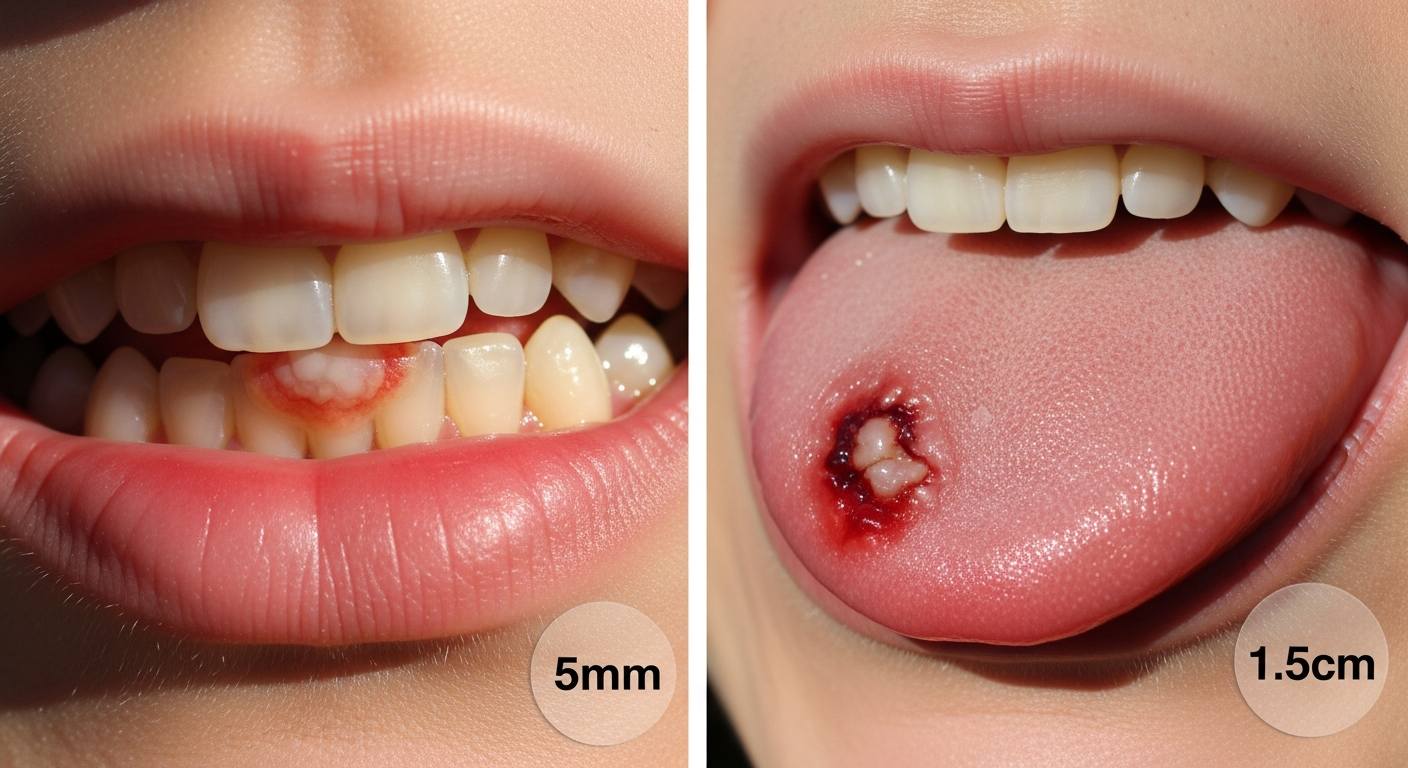
Size and Growth: Simple ulcers stay about the same size or start to shrink as they heal. They typically do not expand or spread. In contrast, a concerning sore may slowly grow or develop a lump beneath it. If a sore seems to be getting bigger or thicker over time, it’s a warning sign.
-
Duration: Canker sores normally heal within one to two weeks. A key red flag for cancer is a sore that won’t go away. Any mouth sore that is still present after two or three weeks – and especially if it’s getting worse – should be examined by a professional.
-
Location: Mouth ulcers can appear anywhere inside the mouth, like the cheeks, tongue, gums, or roof of the mouth. Oral cancer can also appear in these places, but common sites include the sides of the tongue, the floor of the mouth, or the inside of the lower lip. In practice, location alone isn’t enough to tell them apart, but it’s useful context.
-
Other Symptoms: A simple canker sore usually doesn’t cause any symptoms beyond its own pain. In contrast, oral cancer may cause additional signs such as difficulty swallowing or chewing, a persistent sore throat, unexplained ear or jaw pain, or a lump or swelling in the neck (which could mean the cancer has spread to lymph nodes).
When to Worry and See a Doctor
The most important thing is to watch how a sore behaves. Talk to your dentist or doctor if:
-
A mouth sore doesn’t heal within two to three weeks.
-
It grows larger or thicker over time.
-
The edges become irregular, or it shows unusual colors (bright red, very white, or a mix).
-
It bleeds easily, even when you’re not biting it.
-
You have other symptoms like trouble swallowing, a lasting sore throat, unexplained ear or jaw pain, or numbness in part of the mouth.
-
You notice a lump in your neck or under your jaw.
Most mouth sores turn out to be harmless canker sores, but it’s better to be safe. If something feels off or a sore just won’t go away, have it examined. Early detection of oral cancer makes a big difference in treatment and outcomes.
In summary, the biggest difference is healing time and behavior. A typical canker sore is painful but temporary, while an oral cancer sore lingers and may grow or change. Keep an eye on any persistent mouth sore and ask a professional to evaluate it if it doesn’t act like a normal ulcer.
Remember, most mouth sores will heal quickly. If you find a sore that just won’t quit, that’s the clue. Dental and medical professionals have seen both harmless ulcers and serious cancers. They use these differences – especially healing time and change in appearance – to figure out what it is. So if something feels off, it’s wise to have it evaluated. Early action can lead to better outcomes.