Teeth whitening treatments are cosmetic dental procedures that use peroxide-based bleaches to safely lighten the shade of your natural teeth. By breaking down stain molecules, these treatments can brighten both surface (extrinsic) and deeper (intrinsic) discoloration. Common options include professional whitening done in a dentist’s office, dentist-prescribed home kits (custom trays with bleaching gel), or over-the-counter (OTC) products like whitening strips or gels. When used as directed, whitening is generally effective: experts note that hydrogen peroxide or carbamide peroxide will “break stains into smaller pieces,” lightening teeth. The American Dental Association (ADA) confirms these methods work on natural teeth (note: crowns, veneers or fillings will not change color). The key is following instructions and having a dentist check your teeth first; studies show peroxide-based whitening is “safe and effective” when manufacturer’s protocols are followed.
How Whitening Works (and What It Treats)
Our teeth can darken from foods, drink, smoking, or aging. Whitening agents penetrate the enamel and dentin to oxidize (break apart) colored compounds. The active bleaches – hydrogen peroxide or its weaker cousin carbamide peroxide – diffuse through enamel and dentin and react with stain molecules. This chemical reaction makes stains less noticeable, so your teeth appear whiter. Yellowish stains (e.g. from coffee or tobacco) respond well, while grayish tint (from certain antibiotics or aging) may resist whitening.
It’s important to know that whitening only works on natural tooth structure. Dental restorations like caps, veneers, crowns or fillings stay the same shade, even if surrounding teeth get lighter. Also, very dark intrinsic stains (such as those from tetracycline antibiotics) may require multiple months of treatment to improve. In short, whitening lightens what it can, but results vary with the type of stain and tooth history. Always have a dentist examine your teeth first to identify causes of discoloration and ensure no cavities or gum issues are present.
Types of Whitening Treatments
Dental whitening comes in three main forms: in-office bleaching, dentist-guided take-home kits, and OTC products. Each uses peroxide gel, but they differ in strength, speed, and cost.
-
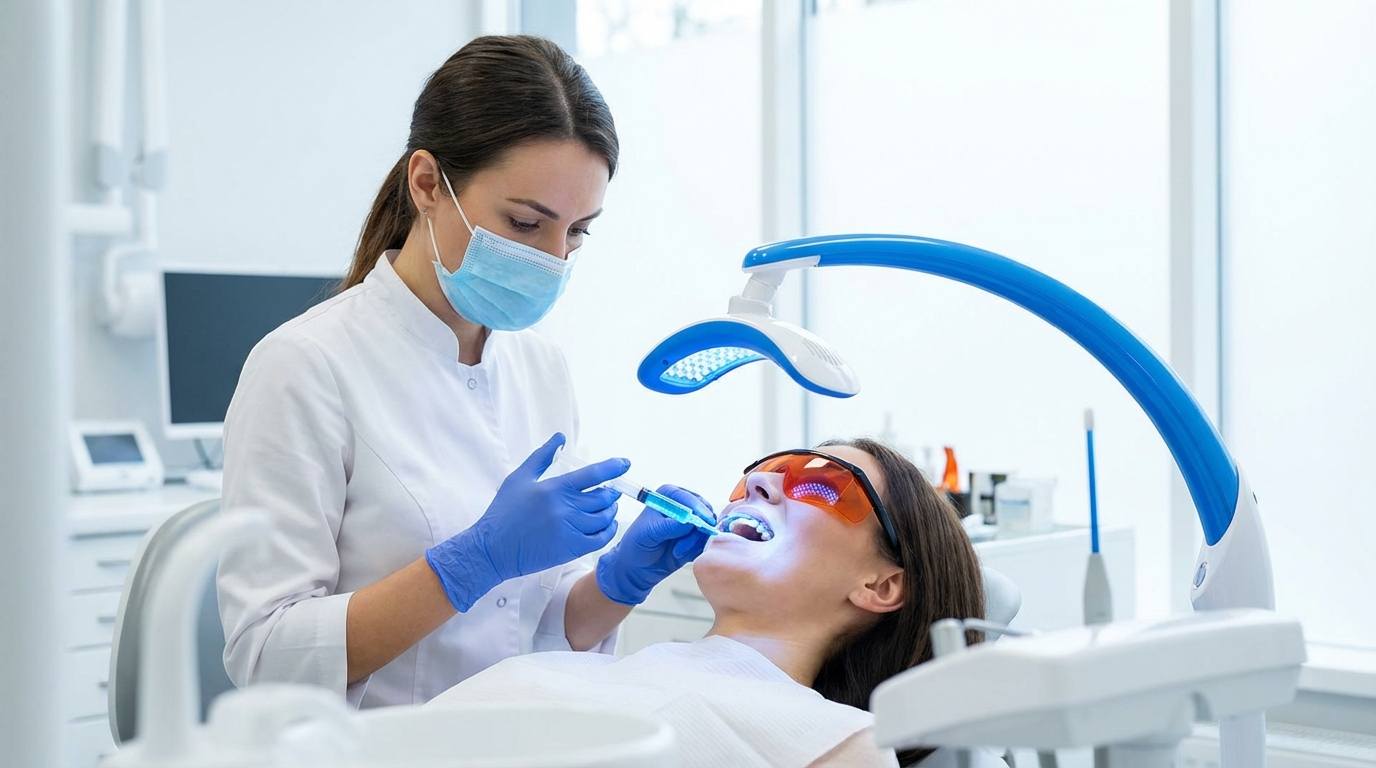
In-Office Whitening: Performed by a dentist, this uses a high-concentration peroxide gel (often with LED light) on teeth. It typically requires one visit of about 15 minutes to a couple of hours. The dentist protects your gums, then applies the bleach. This method gives the fastest results (sometimes 5–10 shades brighter in one sitting) and is very safe under professional supervision. Pros: Quick and powerful, supervised by a dentist, long-lasting results. Cons: Most expensive (~$500–$1000) and may cause temporary sensitivity due to the strong gel.
-
Dentist-Prescribed At-Home Kits: Your dentist can make custom-fitted trays and give you professional-grade gel to use at home. You fill the trays and wear them a few hours a day (or overnight) for usually 1–2 weeks. The peroxide concentration is lower than in-office treatment. Pros: Cheaper than in-office (around $150–$600), tailored to your mouth, gradual results, still dentist-approved. Cons: Results take longer (days to weeks), requires discipline, trays can irritate gums if ill-fitting.
-
Over-the-Counter (OTC) Products: This category includes whitening strips, gels, paint-on brushes, and low-dose take-home trays you buy at a drugstore. These use much lower peroxide levels to be safe without supervision. Pros: Very affordable (from about $10–$55), convenient (use at any time, no dental visit needed). Cons: Slowest results (often weeks of daily use), less dramatic whitening, one-size-fits-all trays or strips may not cover all teeth evenly, risk of misuse (e.g., leaving on too long can irritate gums).
Whitening toothpaste is another OTC option, but note it only removes surface stains with mild abrasives – it does not bleach enamel. Such toothpaste can polish off coffee or tea stains, but it won’t change the tooth’s intrinsic color. For OTC bleaching products, look for the ADA Seal of Acceptance. Products with the ADA Seal have been tested to be safe and effective. Major brands like Crest Whitestrips carry this seal and have evidence supporting their efficacy.
Clinical studies comparing methods find no big difference in final results when protocols are followed. A 2016 review found in-office and at-home bleaching achieve similar whitening and sensitivity outcomes. A 2025 update likewise showed little difference in overall shade change (ΔSGU) or risk of sensitivity between approaches. (The 2025 review did note slightly less sensitivity intensity with at-home kits, and a marginally higher color change measure, but evidence was low-quality.) In practice, whether you choose in-office or custom trays often comes down to personal preference, budget, and how quickly you want to see results.
What to Expect: Results, Timeline, and Cost
After whitening, teeth usually lighten by several shades. How long the effect lasts varies – most people enjoy noticeably whiter teeth for 6–12 months or longer with good maintenance. Eventually, everyday foods, drinks or smoking will dull the brightness, so touch-ups or maintenance treatments may be needed.
Duration per treatment: An in-office session may only take 15–60 minutes but might be repeated after a week for an extra boost. At-home trays usually require daily wear for a week or two (often 30–60 minutes per day) to reach the desired whiteness. OTC products might need daily use for 2–4 weeks. For example, ADA notes that at-home bleaching can take “anywhere from a few days to a few weeks” to show results, and OTC strips may take twice as long as dentist kits.
Cost estimates (U.S. average): According to health surveys and dental sources, whitening prices range widely. On the low end, OTC products cost just $10–$100. A custom take-home kit from your dentist is typically $150–$600. Professional in-office whitening averages about $500–$1,000 per visit (the U.S. average was ~$508 in 2022). Keep in mind: location and dentist experience can affect price – rates in big cities are often higher. Dental insurance generally does not cover whitening (it’s considered cosmetic), so plan to pay out-of-pocket.
In rare cases of a single dark tooth (e.g. after a root canal), a dentist/endodontist can perform “internal bleaching”, placing bleach inside the tooth. This is a specialized procedure (typically about $300 per tooth). For most people, the options above cover the needs.
Safety, Risks, and Side Effects
The ADA and experts agree: when used properly, teeth whitening is generally safe. Common side effects are usually mild and temporary. Sensitivity (to hot/cold or touch) is the most frequent issue, because peroxide can reach the dentin layer and irritate nerves. If you feel sensitivity, most dentists recommend pausing treatment or using sensitivity toothpaste until it subsides. Similarly, gum irritation or slight chemical burns can occur if bleaching gel contacts the gums too long. Using a proper tray and short exposure time (or getting it done in-office) minimizes these risks.
Tooth enamel and gums can tolerate occasional whitening. However, overuse or very high concentrations (beyond dentist advice) can damage enamel or gum tissue. Always follow product instructions or dentist guidance. The ADA notes that products with the ADA Seal have been tested for safety; avoid unregulated “home remedies.” For example, DIY methods like lemon juice or charcoal are unproven and potentially harmful. ADA guidance warns that acidic items (vinegar, lemon) can erode enamel if in contact too long, and scrubs like charcoal have no proven benefit – in fact abrasive mixtures can wear away enamel and expose the yellow dentin. Stick to dentist-approved methods to protect your enamel and gums.
A dentist’s exam before whitening is wise. Your dentist can check for cavities, gum disease, or cracked teeth, which should be treated first. They can also set realistic expectations: some teeth only lighten to a certain level. If you have existing restorations, discuss whether whitening fits your goals (since fillings or crowns won’t change color). And tell your dentist about any tooth sensitivity, cold sores, or pregnancy, as these can affect timing.
Tips for a Brighter, Longer-Lasting Smile
Getting your teeth a shade or two lighter is only half the goal – keeping them white is next. Practice a good oral care routine: brush twice daily and floss once a day to prevent new stains and keep teeth healthy. Use a whitening toothpaste with the ADA Seal for daily maintenance – these have gentle polishing agents to slow stain buildup.
Limit or rinse immediately after consuming stain-causing foods/drinks (coffee, tea, red wine, soda). When possible, drink through a straw to reduce contact with front teeth. Avoid tobacco altogether, as smoking is a major stain culprit. Stay hydrated and keep your tongue clean to discourage plaque.
When you first complete a whitening course, your dentist may give you touch-up gel or recommend annual “booster” sessions – especially if you smoke or drink coffee. Even whitening chewing gum or mouthrinse (with approved ingredients) can help. Finally, visit your dentist regularly for cleanings; professional cleanings remove surface stains and help keep your smile bright.
Conclusion
Teeth whitening can be a quick confidence-booster, brightening most people’s smiles by several shades. The safest approach is to consult your dentist: they will recommend the right method (in-office or custom take-home) based on your needs. All effective whitening treatments use peroxide to break down stains. In-office procedures work fast but cost more, while at-home kits and OTC products work more slowly and affordably. Side effects like temporary sensitivity or gum discomfort are common but usually mild. By following dentist instructions and maintaining good oral habits, you can enjoy a whiter smile safely.
Remember: only natural teeth whiten, and results aren’t permanent. With proper care and touch-ups, a whitening treatment can give you a brighter, more confident smile. Always prioritize safety – look for ADA-accepted products, follow directions, and when in doubt, ask your dentist.