Bacterial pink eye germs (the bacteria that cause conjunctivitis) usually don’t linger on surfaces for very long. In fact, most strains die off within a few hours once outside the eye. Hard, non-porous surfaces (like metal or plastic) might allow these bacteria to survive up to 24–48 hours, but on soft fabrics or paper they tend to die much faster. To put it simply: if someone with pink eye touches a doorknob or countertop, those germs probably won’t remain infectious beyond a day or two. Fortunately, simple cleaning and hygiene steps can dramatically cut the risk of spreading pink eye.
Why Surfaces Matter for Pink Eye Spread
Bacterial pink eye spreads when eye discharge containing bacteria comes into contact with someone else’s eyes or with objects they touch later. For example, one child could rub a sick eye and then pick up a toy, passing germs to another child who later touches it and then their own eye. This is why doctors stress cleaning surfaces and practicing good hand hygiene. Clean shared objects and wash hands often, especially after contact with an infected person, to break the chain of infection.
Once on a surface, conjunctivitis bacteria start dying off quickly. Unlike some hardy viruses, most pink eye bacteria are not tough outside the body. Medical sources note that “most bacteria cannot survive more than 2 to 8 hours” on surfaces, though a few strains can last up to one or two days. In short, a doorknob or countertop touched hours ago is usually much less risky, because the germs will have largely perished.
Survival Time of Bacterial Pink Eye on Surfaces
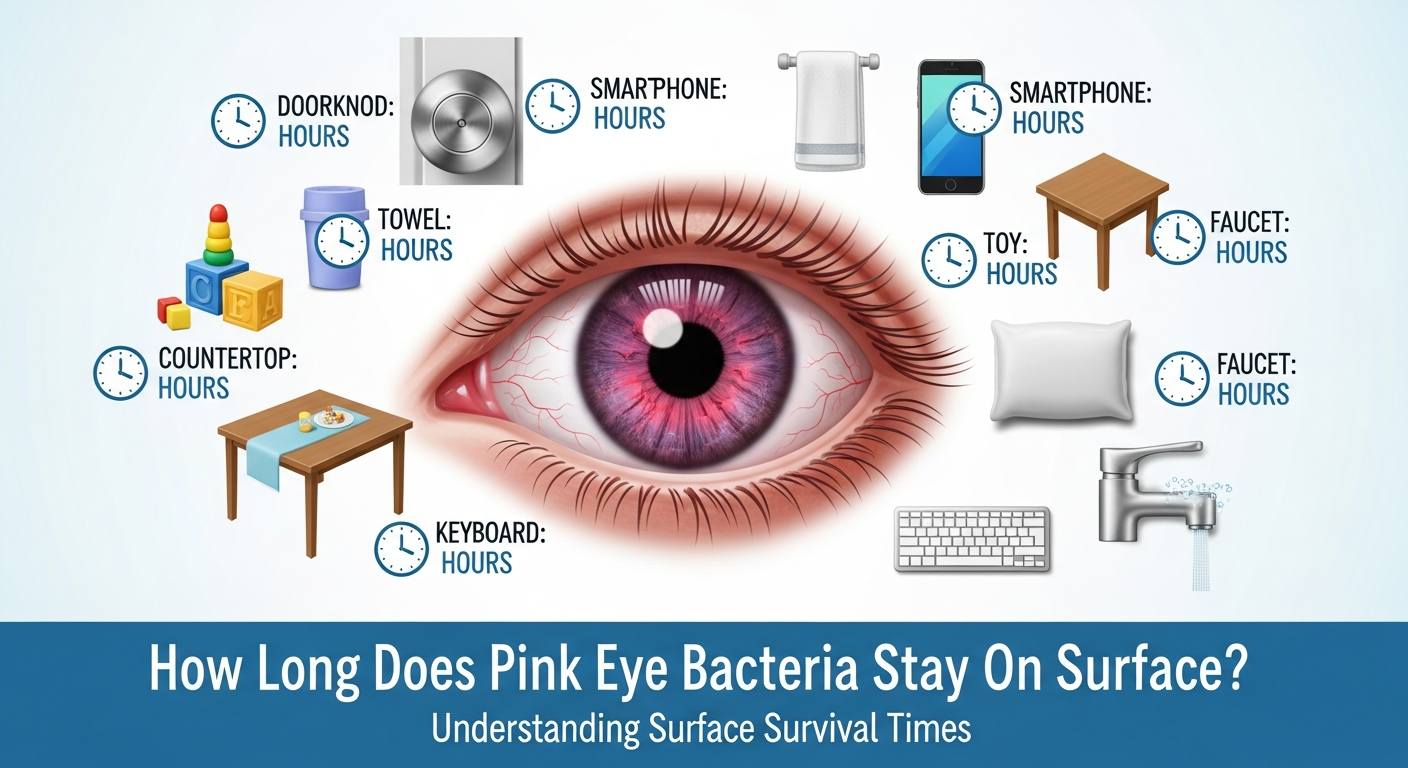
On hard, non-porous surfaces like plastic, glass, or metal, pink eye bacteria survive the longest. These materials don’t absorb moisture, so any eye discharge stays wet longer. Studies show bacterial conjunctivitis germs can hang around on such surfaces for 24–48 hours under ideal conditions. In contrast, porous surfaces (cotton towels, clothing, paper, or fabric) soak up moisture and dry out the bacteria, often killing them within a few hours.
Temperature and humidity also matter. Bacteria hate heat and dryness: a hot sunny day or a warm, dry room will inactivate germs faster, while cool, damp conditions (like a cold bathroom) can keep them alive a bit longer. However, even in cool, moist conditions, experts agree that pink eye bacteria rarely survive beyond 48 hours on any surface. In practice, the risk from a contaminated surface is mostly in the first day or two.
For context: viral pink eye (such as adenovirus) is much more stubborn. Some viruses can linger on surfaces for days or weeks, while bacterial pink eye germs usually die off much faster. Either way, pink eye is most contagious while symptoms are active, so cleaning surfaces is always wise.
Factors That Affect Germ Survival
Aside from surface type and climate, a couple of other factors affect how long pink eye germs stick around:
-
Sunlight and disinfectants. UV light from the sun or household bleach solutions can rapidly kill conjunctivitis bacteria. Leaving items in direct sunlight or wiping them with a disinfectant greatly shortens germ life.
-
Amount of discharge. A thick patch of eye mucus might shield bacteria a bit longer than a thin smear. In reality, though, any noticeable discharge drying on a surface is unlikely to be infectious after about 24 hours in most conditions.
Bottom line: assume any spot an infected person touched could harbor live bacteria for roughly 1–2 days. After that, the germs are probably gone. This is why many experts recommend washing pillowcases and towels after about 48 hours from the start of pink eye symptoms.
Cleaning and Disinfection to Kill Pink Eye Bacteria
Cleaning is the most effective way to stop spread. In general, soap and water or standard disinfectants will easily kill these bacteria. For example, washing clothes, sheets, and towels in hot water with detergent wipes out virtually all pink eye germs.
Many parents use their dishwasher or washing machine to sanitize toys, baby items, and bedding. This is a convenient way to disinfect items that can’t be easily wiped down. Running them through a hot wash (or scrubbing with hot, soapy water – adding a bit of bleach when safe) will wash away any lingering bacteria.
For high-touch surfaces around the home, regular disinfection is wise. Wipe down doorknobs, faucets, phones, keyboards, light switches, and other frequently handled objects with a disinfectant (at least 70% alcohol or diluted bleach). These cleaners kill pink eye bacteria on contact. Let cleaned surfaces air-dry completely and repeat daily during an active infection.
In addition to cleaning, don’t share personal items. Wash pillowcases, towels, and washcloths in hot water every day. Avoid sharing eye drops, makeup, or eyeglasses. Wash your hands often (at least 20 seconds with soap) especially after touching anything that might be contaminated, and avoid rubbing your eyes. These steps, combined with surface cleaning, form a strong defense against pink eye.
Key Takeaways
In summary, bacterial pink eye germs don’t last long on surfaces – usually no more than a day or two. Even so, they can spread easily in that time, so it’s best to clean thoroughly when someone is sick. Treat any recently touched item as contaminated: wash your hands often, avoid touching your face, and disinfect shared surfaces and fabrics regularly.
If someone in your household has pink eye, wipe down or wash anything they touch. Launder towels, sheets, and pillowcases daily in hot water. Disinfect doorknobs, faucets, phones, and remotes. Don’t share towels, pillows, or eye makeup while the infection is active. With these commonsense habits, any lingering bacteria on surfaces will be gone before they can infect others.
By keeping up these cleaning and hygiene practices, you’ll virtually eliminate the risk of spreading pink eye in your home or school. Even if a few germs survive for a day, your next round of cleaning will knock them out. With proper care, you can rest easy that pink eye won’t hop from one person to another.