If you have peripheral artery disease and you’re waking up at night with that awful burning or cramping in your legs, you already know how exhausting it gets. You’re not just dealing with a circulation problem during the day anymore. It’s following you to bed.
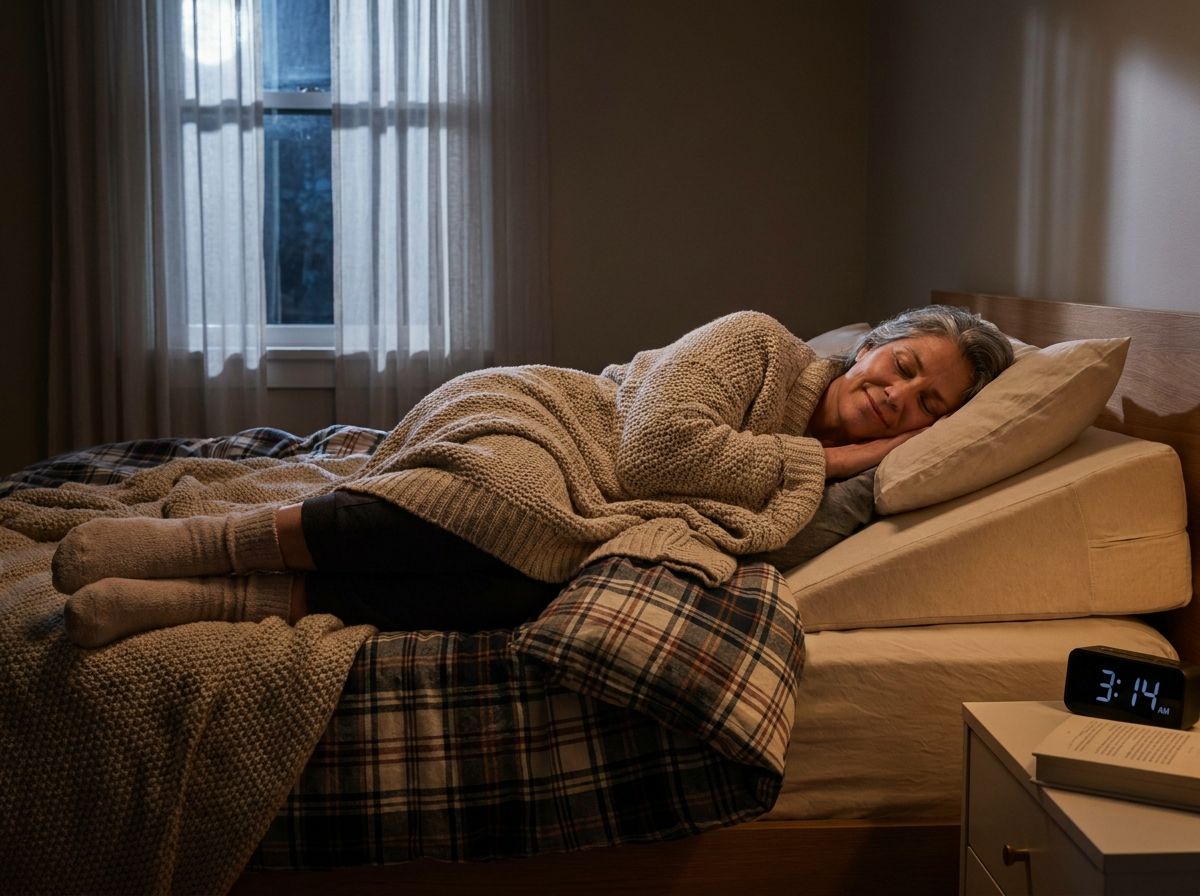
So let’s get straight to it. The best sleeping position for PAD is on your back, with your upper body raised just a little. Not fully sitting up. Not completely flat. Somewhere gently in between, like that relaxed recline you’d settle into on a lazy afternoon. Doctors call it the Semi-Fowler position, and the reason it helps is pretty straightforward once you think about it: gravity pulls blood toward your legs when your upper body is higher, and that’s exactly what narrowed arteries need.
That’s the short answer. Here’s everything else worth knowing.
What’s Actually Happening When You Can’t Sleep
PAD means your arteries, the ones carrying oxygenated blood down to your legs, have gotten narrower. Plaque builds up, space gets tight, and blood flow to the lower limbs becomes genuinely difficult.
During the day you’re moving around, which helps. But at night? You stop. You go still. And those narrowed arteries suddenly have to work harder with no help from movement at all. That’s when the pain shows up. Deep aching. Burning in the feet. Sometimes a throbbing that starts in the calf and works its way down.
A lot of PAD patients do something almost instinctive, they hang their legs off the side of the bed in the middle of the night. And it helps. Not because it’s a great long-term strategy, but because hanging the legs lower lets gravity pull blood toward them. That small moment of relief is actually pointing you directly toward the right sleep position.
How to Actually Set Up the Semi-Fowler Position
You really don’t need anything fancy here. A wedge pillow is probably the easiest solution, it’s a foam triangle designed exactly for this, and it won’t shift around on you at 3 a.m. the way stacked pillows tend to. If you don’t have one, two or three regular pillows under your head, neck, and upper back will do the job reasonably well.
The angle you’re aiming for is somewhere between 15 and 45 degrees. Think less “reading in bed” and more “very gently reclined.” Your hips and legs stay flat on the mattress, that part is important.
Straight legs. Not propped up. Not bent at the knees for a long stretch. Just flat, with the upper body doing that slight incline.
If you’re lucky enough to have an adjustable bed, raise the head section only. Not the foot section. That’s a completely different thing and we’ll get to why that matters in a second.
Why You Should NOT Elevate Your Legs (This Surprises People)
“Elevate your legs” is advice you hear constantly, for swollen ankles, for tired feet, for veins. It gets applied everywhere. And so a lot of PAD patients try it at night, fully expecting relief, and wake up in more pain than before.
Here’s the thing. Leg elevation helps conditions where you need blood moving away from the limbs. PAD is the opposite. Your arteries are already struggling to push blood down to your feet. When you raise your legs above your heart, blood now has to travel uphill to reach them. For arteries that are already narrowed, that extra resistance is too much.
The result is exactly what you don’t want, less blood reaching your feet, more pain, sometimes that bluish or pale look to the skin.
Legs stay flat at night. That’s the rule for PAD.
Side Sleeping, It’s Not Totally Off the Table
Side sleeping is a bit of a gray area with PAD. It’s not ideal, but for some people it’s more manageable than others.
Here’s when it actually makes sense: if you also have sleep apnea. The two conditions share a lot of the same risk factors, heart strain, poor circulation, high blood pressure, so having both isn’t uncommon. And for sleep apnea, side sleeping genuinely helps. It keeps your airway open and cuts down on those nighttime breathing interruptions that stress your heart out even more.
The problem with side sleeping and PAD is really about how you do it. If you curl up tightly, knees pulled toward your chest, whole body in a C-shape, you’re bending the arteries behind your knees and slowing flow right through them. That’s the version to avoid.
If side sleeping is just where you naturally end up, keep your legs as extended as you comfortably can. Put a pillow between your knees. And try to favor the side where your symptoms are less severe, since whichever leg is on the bottom tends to get a little less blood flow when you’re lying on it.
Stomach Sleeping Makes Everything Worse, Full Stop
There’s really no good angle on stomach sleeping for someone managing PAD. When you’re face down, you’re pressing against blood vessels that run through the abdomen, making your heart work harder to pump blood anywhere. Your neck twists sideways, your lower back curves up, your breathing gets shallower.
It’s basically everything your body doesn’t need when it’s already dealing with a circulatory problem.
If you’ve slept on your stomach your whole life, switching is genuinely hard, but a long body pillow helps more than most people expect. Press it against your side before bed. Your body has something to lean into without rolling all the way face-down. Most people adapt within a few weeks, even stubborn stomach sleepers.
Other Things That Quietly Affect How You Sleep With PAD
Cold feet literally hurt more. Cold causes blood vessels to constrict, and constricted vessels mean less blood getting through already-narrow arteries. Lightweight, loose socks before bed, not the compression kind, those are for daytime, can make a real difference. Just make sure they don’t have a tight elastic band cutting into the ankle.
Alcohol before bed is working against you. It feels like it relaxes everything, but it causes vasoconstriction, the vessels tighten. Same with nicotine. Both of them are squeezing the very pathways you need open while you sleep.
Tucked-in sheets can actually restrict your feet. It sounds like a small thing but tightly made beds press down on your toes and the tops of your feet. Leave enough slack that your feet can sit naturally without being pinched from above.
A short walk in the evening genuinely helps. Not a hard workout, just 10 or 15 minutes. It warms up the leg muscles, gets blood moving, and makes it easier to fall into a comfortable position. A lot of vascular doctors already recommend daily walking as part of PAD management; think of the evening version as prep for better sleep.
When Night time Pain Is a Warning Sign
Waking up with pain in your legs or feet at rest, what doctors call “rest pain”, is actually a signal that PAD has progressed past the early stages. It’s not just an inconvenience. It’s your body telling you something.
If you’re also noticing sores on your feet or toes that aren’t healing, skin that looks unusually shiny or takes on a bluish tint, or one foot that feels significantly colder than the other, those aren’t things to wait on. Get in touch with your vascular care team.
Sleep positioning can reduce the discomfort, but it doesn’t slow down the disease itself. The two things work together, not instead of each other. And with PAD especially, catching progression early gives you a lot more options.
Conclusion
Back position, upper body raised gently, legs flat and straight, that’s where you want to start. Warm socks, no alcohol or cigarettes close to bedtime, a short walk before you sleep, loose sheets around your feet.
If side sleeping is unavoidable for you, do it with extended legs and a pillow between the knees. Don’t elevate your legs thinking it’ll help, with PAD, it won’t. And stomach sleeping really needs to go.
None of this is complicated. It just takes a bit of intention when you’re setting up for bed each night. Your circulation is already working hard. Make it a little easier on itself while you sleep.