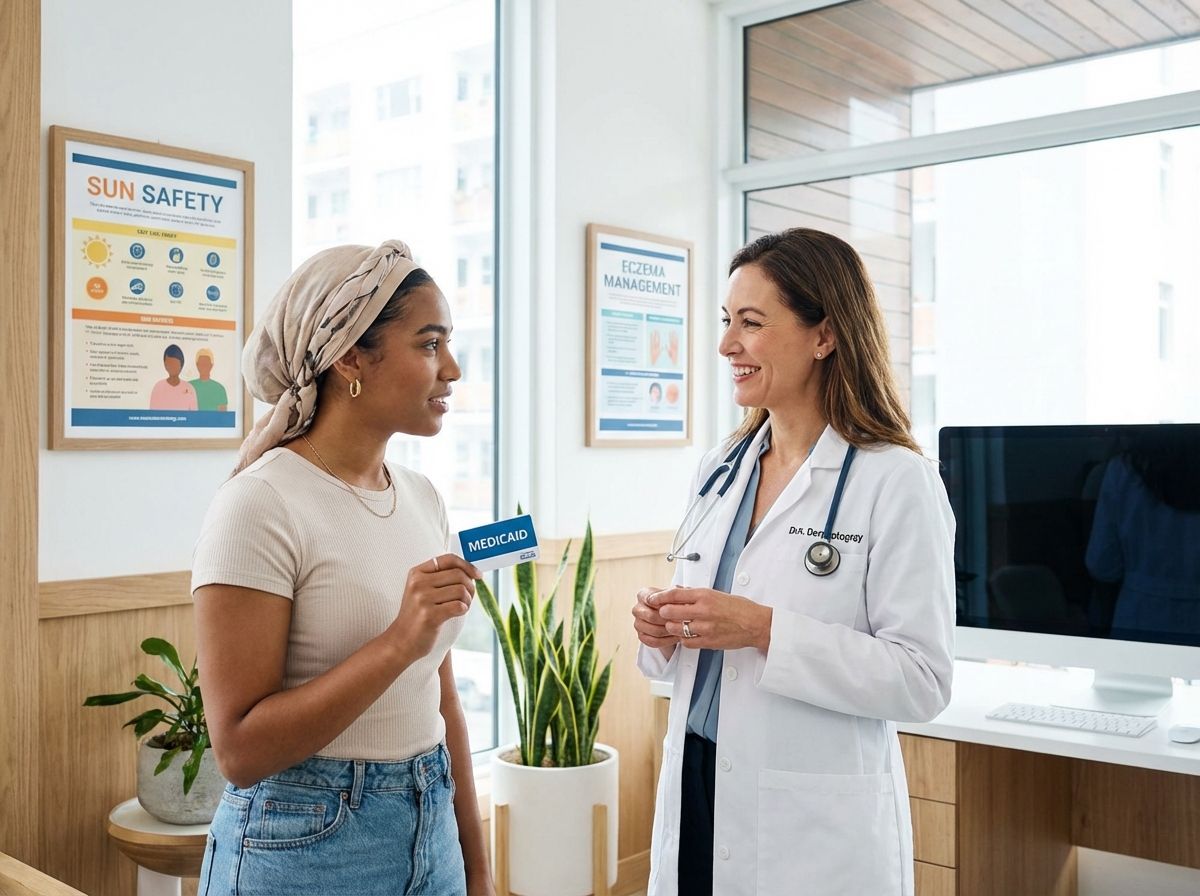
So you’ve got a skin issue that won’t go away, you’re on Medicaid, and you’re trying to figure out if you can actually get a dermatologist to see you. Short answer — yes, you can. It’s not as simple as Googling “dermatologist near me” and booking the first result, but it’s far from impossible. You just need to know where to look, and that’s exactly what this guide is for.
Why So Many Dermatologists Don’t Accept Medicaid
Before we get into the “how to find one” part, it helps to understand why this is even a problem in the first place.
Dermatologists who run private practices get to decide which insurance plans they’ll work with. And because Medicaid typically pays doctors less than private insurers do, a lot of them simply choose not to participate. It’s frustrating, especially when you need care — but it doesn’t mean you’re stuck.
There are plenty of dermatologists who do take Medicaid, especially those working in hospital systems, community health centers, and teaching clinics. You just have to look beyond the private offices you might find on Zocdoc or Healthgrades. Those directories skew heavily toward private practices, which is why it can feel like nobody accepts Medicaid when the reality is you’re just searching in the wrong places.
Where to Actually Find a Medicaid Dermatologist
Start With Your Plan’s Own Provider Directory
This sounds obvious, but a lot of people skip it. If your Medicaid is managed through a plan — Molina, WellCare, Centene, or whatever your state offers — that plan has a website with a provider search tool. Log in, look for specialists, type in “dermatology,” and search by your ZIP code.
The results you get here are specific to your plan, which makes them more useful than a generic Google search. That said, these directories do go out of date. A doctor’s name might still be listed even if they stopped taking new Medicaid patients six months ago. So whatever name you find, call the office before assuming you can book.
When you call, don’t just ask “do you take Medicaid?” — ask specifically about your plan. Say something like, “I have Medicaid through [plan name] — are you in-network for that, and do you have availability for new patients?” That extra detail matters more than most people realize.
Look Into Federally Qualified Health Centers
This is the option most people have never heard of, and honestly it’s one of the best ones.
Federally Qualified Health Centers, or FQHCs, are community health clinics that receive federal funding specifically so they can treat patients regardless of what insurance they have or whether they can afford to pay at all. They’re legally required to see you on a sliding-fee scale based on your income, and the vast majority of them accept Medicaid.
A lot of FQHCs have dermatology services in-house. Others will connect you with a dermatologist through a referral arrangement. Either way, it’s worth finding one near you.
You can locate your nearest FQHC by going to findahealthcenter.hrsa.gov — it’s a free tool run by the Health Resources & Services Administration. Just enter your city or ZIP code and it’ll show you what’s available nearby.
Use the AAD’s Doctor Finder (But Call to Verify)
The American Academy of Dermatology has a search tool at aad.org where you can find board-certified dermatologists by location. The catch is that it doesn’t filter by insurance, so you can’t just search “Medicaid” and get a ready list.
What you can do is use it to build a list of dermatologists near you and then call them one by one to ask about Medicaid. Yes, it takes more time. But the AAD directory is one of the most comprehensive listings of dermatologists in the country, so the selection is much wider than what you’ll find on most insurance portals.
One thing worth knowing — some offices that don’t accept Medicaid directly may still see Medicaid patients under specific circumstances, or they might offer a self-pay rate that’s lower than you’d expect. It never hurts to ask.
Talk to Your Primary Care Doctor
If you have a primary care doctor you see regularly, ask them directly which dermatologists they’d recommend for someone on Medicaid. Doctors refer patients to specialists all the time and tend to know the local landscape better than any online directory does.
There’s another reason to involve your PCP here, too. A lot of Medicaid plans won’t pay for a specialist visit unless your primary care doctor sends you there with a referral. If you skip that step and just book directly with a dermatologist, you might end up responsible for the bill yourself. So check your plan’s rules on referrals before you do anything else.
Call Your State Medicaid Office
Every state runs its own Medicaid program, and each one maintains a list of enrolled providers — including specialists. If the online search isn’t working out, a phone call to your state Medicaid office can get you a list of participating dermatologists in your area.
The number is usually printed on your Medicaid card, or you can find it on your state’s Medicaid or health department website. This is especially useful if you live somewhere rural where online directories tend to have fewer listings.
What Medicaid Will and Won’t Cover
Medicaid covers dermatology visits and treatments when there’s a real medical reason for them. Things like eczema flare-ups, psoriasis management, persistent acne, rosacea, skin infections, wart removal, skin cancer screenings, and biopsies — those are generally covered.
What it won’t cover is anything purely cosmetic. Botox, laser skin resurfacing for aesthetic reasons, chemical peels just for smoother-looking skin — those aren’t going to be covered under Medicaid. The line Medicaid draws is whether the treatment is medically necessary. If it’s treating a condition, you’re likely covered. If it’s elective and cosmetic, you’re not.
If you’re ever unsure, call your plan before your appointment and ask whether a specific service is covered. It takes five minutes and saves you from an unexpected bill.
The Wait Time Problem (And a Few Ways Around It)
One of the real frustrations with finding a Medicaid dermatologist is the wait. Because fewer providers are in-network, the ones who do accept Medicaid often have longer waitlists. A two-to-four week wait is common; sometimes it stretches longer.
A few things that can help. First, ask the front desk to put you on the cancellation list — people cancel appointments all the time and slots open up with little notice. Second, ask whether the office offers telehealth. Virtual dermatology visits have expanded a lot in recent years and many conditions can be evaluated over video. It’s usually faster to book and Medicaid often covers it.
And if you genuinely can’t wait, go back to your primary care doctor. For a lot of common skin conditions, your PCP can start you on treatment while the dermatologist appointment is still weeks out. That way you’re not just sitting there in the meantime.
Before You Hang Up — What to Actually Say on the Phone
People overthink this. You’re not doing anything unusual by asking about Medicaid — it’s one of the most common insurance questions front desk staff hear.
Just say: “I’m looking to schedule with a dermatologist and I have Medicaid through [your plan name]. Do you accept that, and are you taking new patients right now?”
If they say no, follow up with: “Do you happen to know any dermatologists in the area who do accept Medicaid?” Front desk staff work in healthcare — they often know exactly who to point you to, even when their own office isn’t the right fit.