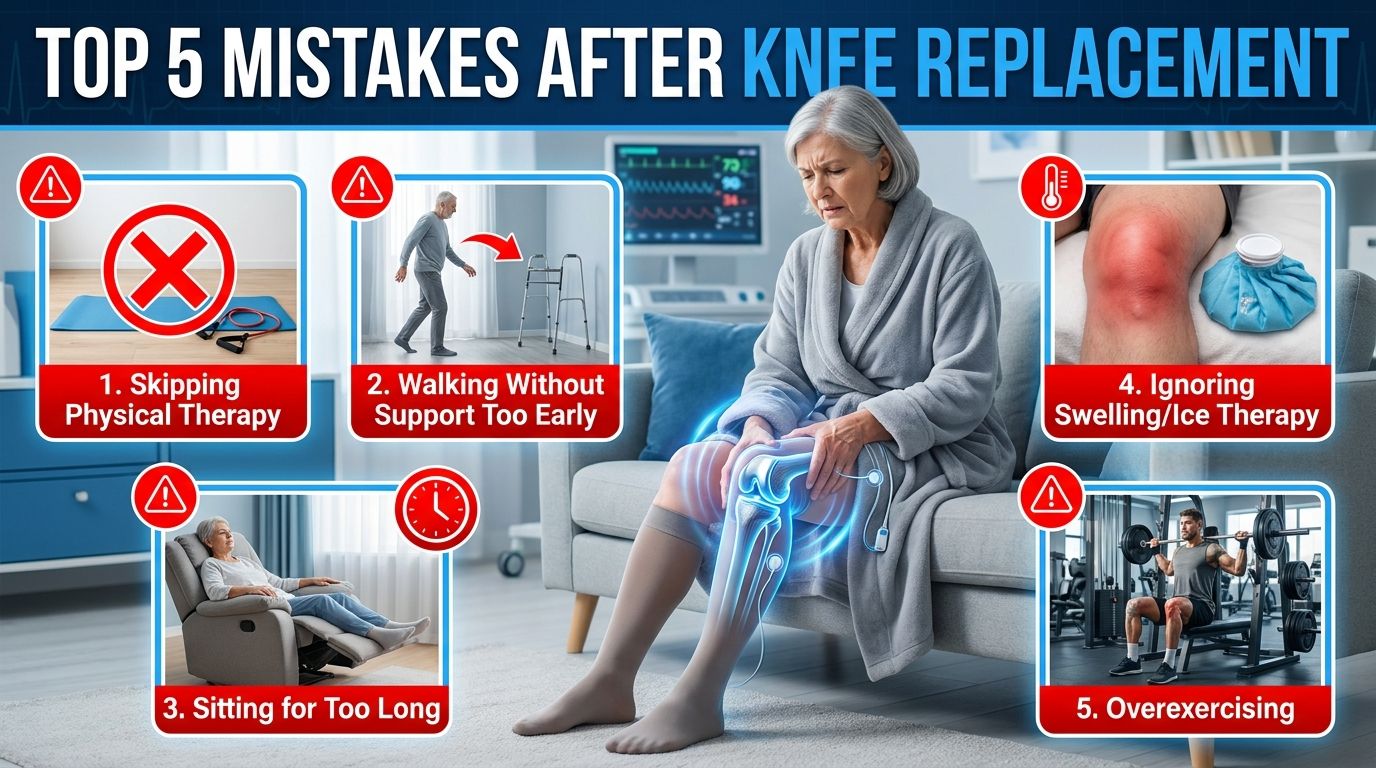
Nobody tells you how much the recovery matters more than the surgery itself. You go through all the prep, the procedure, the hospital stay, and then you come home thinking the worst is over. But honestly, this is where things can go sideways fast. Surgeons at HSS will tell you the same thing. They fix the joint, but what you do in those next few months decides everything. These are the top 5 mistakes after knee replacement that quietly derail recoveries every single day.
Stopping Therapy the Moment Pain Backs Off
This one gets so many people. The knee starts feeling better, walking becomes easier, and suddenly three therapy sessions a week feels like overkill. So they stop going. Or they start skipping. And that is where the trouble begins.
Here is what most patients do not realize. Feeling less pain does not mean the knee is done healing. The muscles around that joint are still weak. Scar tissue is still forming inside. And range of motion does not just come back on its own. It has to be worked for, consistently, over months. Not weeks.
People who quit therapy early almost always end up with stiffness they cannot fix on their own later. The knee plateaus. It never reaches what it could have been. Three months of showing up, even when you feel fine, is what actually completes a recovery.
Treating All Pain the Same Way
Recovery hurts. That is just the reality of it. But not every type of pain means the same thing, and most patients either ignore symptoms that actually matter or they freeze up and stop moving altogether out of fear.
Swelling that keeps getting worse instead of improving. Heat coming from the joint days after activity. Sharp pain in a specific spot that was not there before. These are not normal parts of healing. These are your body flagging something.
Infections do not always announce themselves dramatically. Neither do blood clots. They show up through small signs that are easy to brush off. The patients who report these things early get simple treatment. The ones who wait end up with serious complications. Tell your surgeon. Even if it turns out to be nothing.
Forgetting About Blood Clots Once You Leave the Hospital
While you are still admitted, blood clot prevention is right in front of you. Nurses remind you. Compression devices are on your legs. Medications are scheduled. Then you go home and that whole routine disappears.
But the risk does not disappear with it.
Deep vein thrombosis can develop for weeks after surgery. Sitting in one position for long stretches, skipping doses of blood thinners, or skipping those short daily walks gives clots exactly the conditions they need. And if one moves to your lungs, you are dealing with a pulmonary embolism. That is a completely different level of medical emergency.
Take the medication your doctor prescribed. Keep walking, even just around the house. Wear the compression stockings until you are told you do not need them anymore.
Rushing Back to Normal Too Fast
Four weeks post-surgery and you feel pretty decent. So you start driving again. Take the stairs without holding anything. Head back to work earlier than planned. It feels like progress.
What is actually happening is that you are loading a joint that has not stabilized yet. The implant needs time to settle. The tissue around it is still healing. None of that changes because you feel capable.
Most people cannot drive safely until at least 4 to 6 weeks out. Physical activity beyond short walks usually comes back somewhere between 6 weeks and 3 months, depending on how the individual recovery is going. Feeling ready and being medically cleared are two different things. Your surgeon gives you a timeline for a reason. Follow it even when it feels overly cautious.
Coming Home to a House Full of Fall Hazards
This mistake happens before surgery even happens, in the planning stage, when patients focus entirely on the procedure and nothing on what comes after.
Falls in early recovery are genuinely dangerous. A single bad fall can fracture the bone around the implant or tear the repair. That often means a second surgery. And it happens because of a rug that shifted, a bathroom floor that was slippery, or a bed that sat too low to get out of safely.
Before you come home, the bathroom needs grab bars. The toilet needs a raised seat if it sits low. Rugs that slide around should come up. A clear path through your most-used rooms matters more than people think, especially when you are tired or moving carefully.
Your physical therapist can walk you through how to move safely at home during early recovery. That conversation is worth having before your first week back, not after something goes wrong.
Your Behavior After Surgery Shapes Everything
Most people put all their energy into preparing for surgery day. The recovery period gets an afterthought. But avoiding the top 5 mistakes after knee replacement is what actually determines how that joint performs years down the line. Stay in therapy. Pay attention to what your body is telling you. Protect yourself from the risks that do not disappear once you walk out of the hospital. The surgery creates the opportunity. Recovery is where you decide what to do with it.